
If you want to buy natural pink diamond jewelry or a loose stone, the safest path is simple: get a GIA report, decide on color intensity first, then fit carat weight and clarity to your budget. Natural pinks are scarce, prices climb steeply with every step in intensity, and the gap between a certified natural stone and a look-alike is enormous. Buying a natural pink diamond is less about hunting for a bargain than about avoiding expensive mistakes. This guide walks through each decision in order, starting with the GIA pink diamond report that settles most doubts.
Table of Contents
Quick Answer: How to Buy a Natural Pink Diamond
To buy a natural pink diamond with confidence, work through four steps in this order:
- Insist on a GIA pink diamond report that states natural color origin.
- Choose your intensity. A fancy light pink diamond gives a soft, accessible blush; Fancy Intense and Fancy Vivid give deep, saturated color.
- Set the budget by intensity first, then carat weight, then clarity.
- Match the stone to its report, then enquire for current pricing.
Why Natural Pink Diamonds Are So Rare
Only about one in 10,000 diamonds forms with natural fancy color, and pinks are among the rarest of those. For decades a single source dominated supply. The Argyle mine in Western Australia produced more than 90 percent of the world’s pink diamonds before it closed in November 2020. Mines such as Diavik and Williamson yield the occasional pink, but nothing close to Argyle’s output.
That scarcity shapes everything about the market today: fewer stones, more careful sellers, and prices that reward patience and paperwork. For perspective, the 59.60-carat Pink Star, a Fancy Vivid Pink, sold for $71.2 million at auction in 2017. Few buyers shop at that level, but the same logic applies to a half-carat stone. If you plan to buy natural pink diamond pieces of any size, rarity is exactly why certification is not optional.
Certification: Why a GIA Pink Diamond Report Matters
Before you buy a natural pink diamond, ask who graded it. GIA introduced its colored diamond grading system in 1994, and it remains the reference most serious buyers and sellers use for pink stones. A GIA pink diamond report records the color grade, whether the color is natural or treated, and the clarity, carat weight and cut details. Without it, you are relying on a seller’s word for the single most valuable fact about the stone.
What to check on the report
Color Grade & Modifiers
Check the exact hue, like Fancy Light Pink vs Fancy Purplish Pink.
Color Origin
Ensure the report explicitly states the color is Natural and untreated.
Weight & Dimensions
Verify that the carat weight, shape, and physical measurements match the stone.
Report Number & Inscription
Check the certificate number and match it with the stone’s girdle inscription.
Natural, lab-grown or treated
Lab-grown pink diamonds exist and are priced very differently, so do not buy natural pink diamond stones on trust alone. Treated stones start as paler or brownish diamonds and have their color altered afterward. Both can look convincing under a loupe, and only a laboratory report separates them reliably. A price that looks too good for a natural stone usually is. Ask in writing whether the report states natural color, and walk away if the answer is vague.
Pink Diamond Color Intensity Explained
When you buy a natural pink diamond, color intensity drives value more than any other factor. GIA grades natural pinks from Faint through Fancy Light, Fancy, Fancy Intense, Fancy Vivid and Fancy Deep. Each step up is rarer, and the price jump between steps is large, so decide where you want to land before you look at carat weight.
Natural Pink Diamond
Formed deep in the earth over billions of years with ultimate rarity.
- 🌱 Origin: Formed naturally beneath the Earth’s crust.
- 📜 Report: Always backed by a certified GIA report stating “Natural”.
- 💎 Value: Extremely scarce; holds long-term collectible value.
Lab-Grown Pink Diamond
Created in a laboratory using advanced technology replicating earth conditions.
- 🧪 Origin: Cultured in a controlled technological lab.
- 📜 Report: Certified as lab-grown with identical chemical properties.
- 💰 Value: More accessible; budget-friendly option for larger sizes.
Treated Pink Diamond
Natural lower-grade stones enhanced via HPHT or irradiation treatment.
- 🔬 Origin: Natural base diamond altered via color treatment.
- 📜 Report: Must explicitly state treatment details on the certificate.
- ⚖️ Value: Lower price point than untreated natural pinks.
Fancy light pink diamond: the entry point
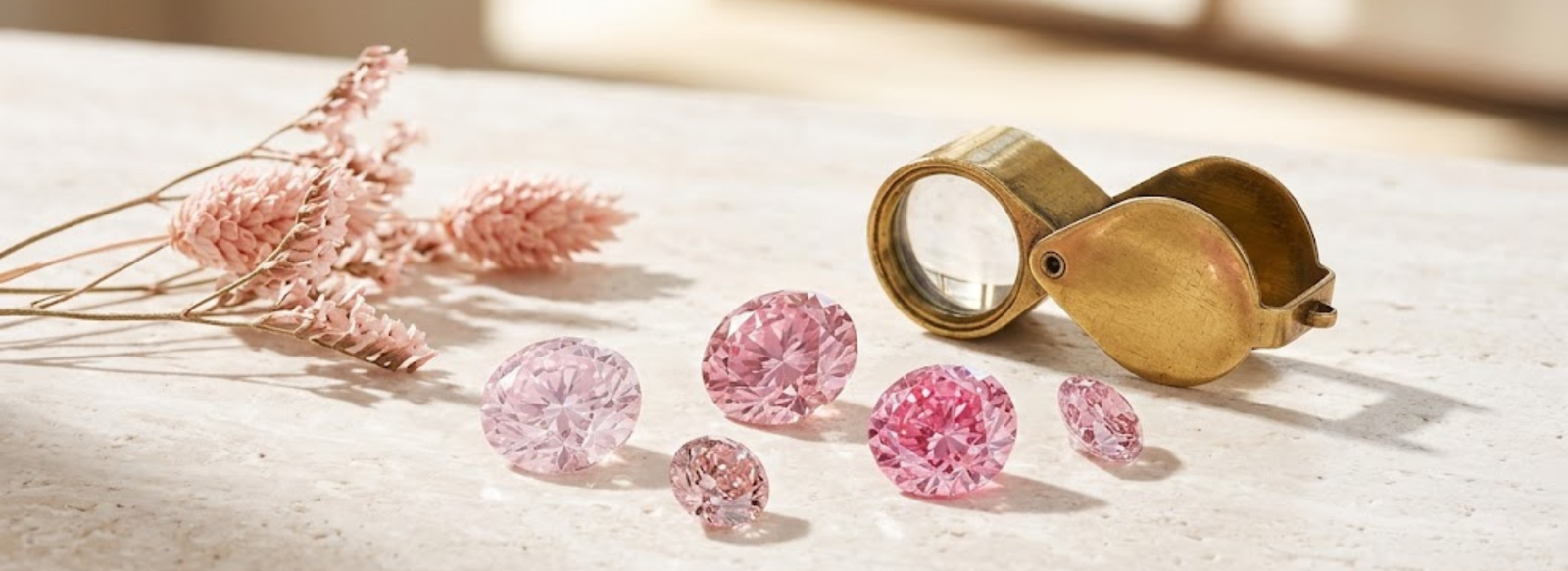
This grade shows color gently, often as a warm blush that changes with the light. For many people who buy a natural pink diamond for the first time, it is the most realistic way to own a certified stone without a collector’s budget. It also pairs well with white diamonds, which can make the pink read stronger.
Modifying colors
Many pinks carry a secondary hue. Purplish pink is widely admired. Brownish pink usually costs less because the brown mutes the pink. Compare the names on the report, not just the photo.
Natural Pink Diamond Price: How to Set Your Budget
Before you buy natural pink diamond jewelry, set a ceiling and a target intensity. Published retail guides quote anything from about $10,000 per carat for paler pinks to several hundred thousand dollars per carat for the most saturated stones. The spread is huge because intensity, not size, sets the base price. Moving from a fancy light pink diamond to Fancy Pink multiplies the cost sharply, and the step from Fancy Intense to Fancy Vivid does it again. Ask for the per-carat price and the total in writing so you can compare stones fairly.
Investment & Budget Strategy
Published market guides range from roughly $10,000 per carat for paler pinks to several hundred thousand dollars per carat for deeply saturated, museum-grade stones.
| Budget approach | Where to aim | Spend on | Save on |
|---|---|---|---|
| Entry | Fancy Light, under one carat | Natural color origin | Carat weight |
| Mid-range | Fancy or Fancy Intense, smaller stones | Color saturation | Clarity, if eye-clean |
| Premium | Fancy Vivid or Deep | Color, then size | Nothing on paperwork |
Where to spend and where to save
When you buy a natural pink diamond, spend on color. Save on clarity where you can: an SI1 stone that looks clean face-up is perfectly acceptable in a pink, because the saturation hides small inclusions. Be careful with investment promises. Pink diamond trading is thin, with wide gaps between buying and selling prices, so buy a stone you love first.
Tip: Compare stones using the same three facts: GIA grade, per-carat price and report number. It keeps you consistent when you buy natural pink diamond options from several sellers.
Loose Pink Diamond or Finished Jewelry?
A loose pink diamond lets you check the report against the stone before it disappears into metal, and it gives you control over the design. It is the cleanest way to buy a natural pink diamond you can verify yourself. White gold or platinum shows color most cleanly, while a halo of white diamonds helps a lighter stone read pinker. Finished pieces suit buyers who want a ready design, but ask for the center stone’s report either way. Browse a loose pink diamond by intensity below, or enquire about stones not yet listed.
Your Pre-Purchase Checklist
Before you buy a natural pink diamond, confirm each of these:
- A GIA report for the exact stone, stating natural color origin.
- A color grade and modifiers that match the intensity you want.
- Per-carat price and total price confirmed in writing.
- A clear return and inspection policy, with room for an independent appraisal.
- Written provenance for any origin claim. Argyle certificates ended with the 2020 closure, so ask for the paperwork behind any Argyle story.
- Insured, tracked shipping.
Work through this list and buying a natural pink diamond becomes a calm, step-by-step decision instead of a gamble.
Browse Natural Pink Diamonds by Intensity
Every stone we offer comes with its GIA report. Tell us the intensity and budget you have in mind and we will send current options.
Fancy Light Pink
Soft, pastel natural pink. The most accessible way into certified color.
Fancy Intense Pink
Strongly saturated color for statement rings and pendants.
Fancy Vivid Pink
The richest natural color, sourced to order for collectors.
Enquire About a Natural Pink Diamond
Share what you are looking for and a diamond specialist will reply with certified options, pricing and report numbers. If you are ready to buy a natural pink diamond or simply want guidance, start here. There is no obligation.
Frequently Asked Questions
How much does a natural pink diamond cost?
Cost depends mostly on color intensity. Published guides range from roughly $10,000 per carat for paler pinks to several hundred thousand dollars per carat for vivid stones. Share your preferred intensity and budget in the enquiry form for a current quote.
Do I need a GIA report to buy a natural pink diamond?
Yes. A GIA report confirms the color grade and whether the color is natural, which is the fact that decides value. Treat any pink stone without a report as unverified.
What does fancy light pink mean?
Fancy Light is a GIA color grade for a soft, pale natural pink, sitting above Light and below Fancy. A fancy light pink diamond is the most accessible way into natural pink.
Can I tell a natural pink diamond from a lab-grown one by eye?
No. Natural, lab-grown and treated pink diamonds can look alike without laboratory equipment. Only a lab report separates them reliably.
Are loose pink diamonds a good investment?
Supply is limited, but trading volume is thin and resale prices can sit well below retail. Buy the stone you love first and treat any appreciation as a bonus. This is general information, not financial advice.
Should I choose a loose stone or a finished ring?
A loose stone lets you check the report against the diamond and design the setting yourself. Finished jewelry is faster. Either way, ask for the report on the center diamond.