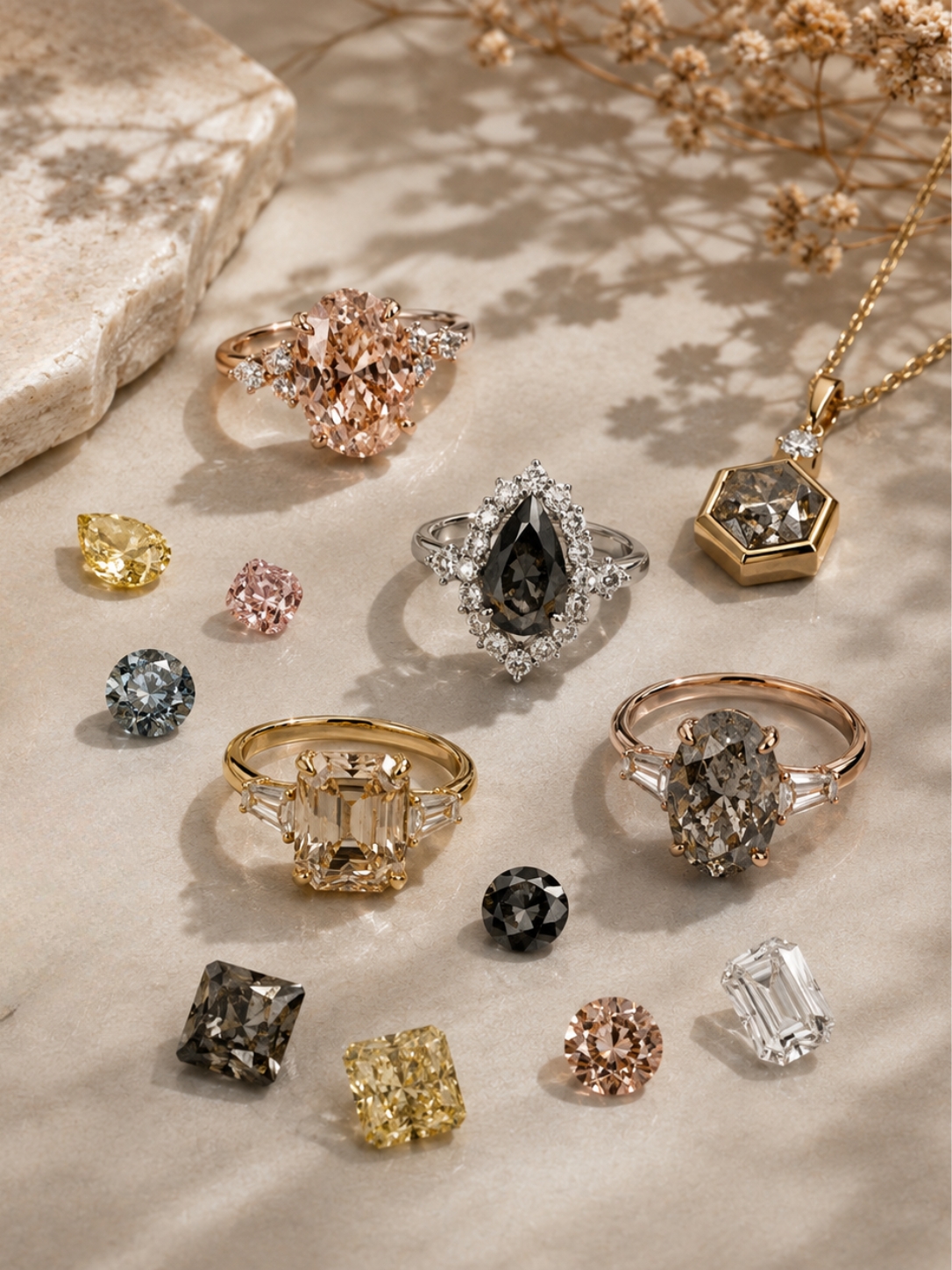


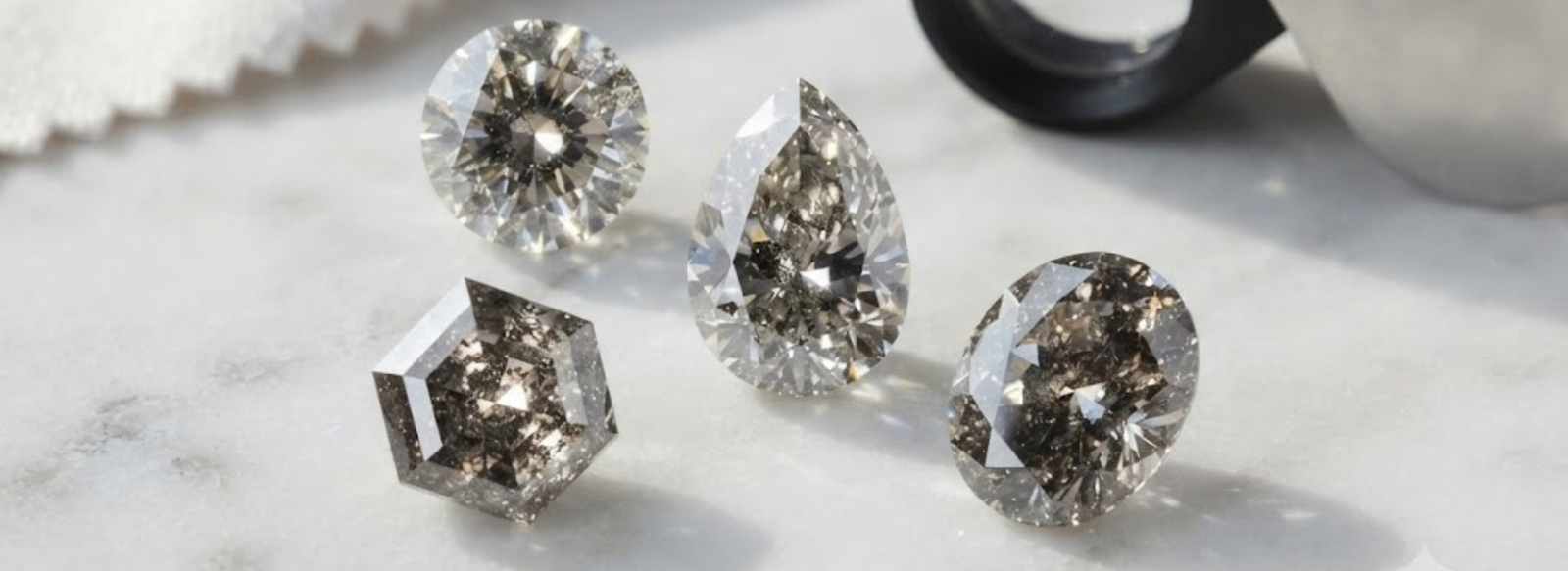
Quick answer: Salt and pepper diamond grading still uses the 4Cs, but clarity carries far less weight than it does for a traditional diamond. Quality gets judged more by pattern density, cut precision, and overall character than by how “clean” the stone looks.
Hand a gemologist a salt and pepper diamond and ask for a clarity grade, and you’ll usually get an I1, I2, or I3. On a traditional grading report, that number would signal a problem stone. Here, it barely tells you anything useful. The grading language stayed the same when this category took off, but what buyers actually need to look at changed completely.
This guide breaks down how salt and pepper diamond grading works, where the classic 4Cs still apply, and what to check instead of chasing a clarity number that was never built for this kind of stone.
Table of Contents
Why Standard Grading Doesn’t Quite Fit
The 4Cs, carat, cut, color, and clarity, were built around one goal: measuring how close a diamond gets to flawless and colorless. That system works well for a traditional stone, where rarity and price climb as inclusions disappear.
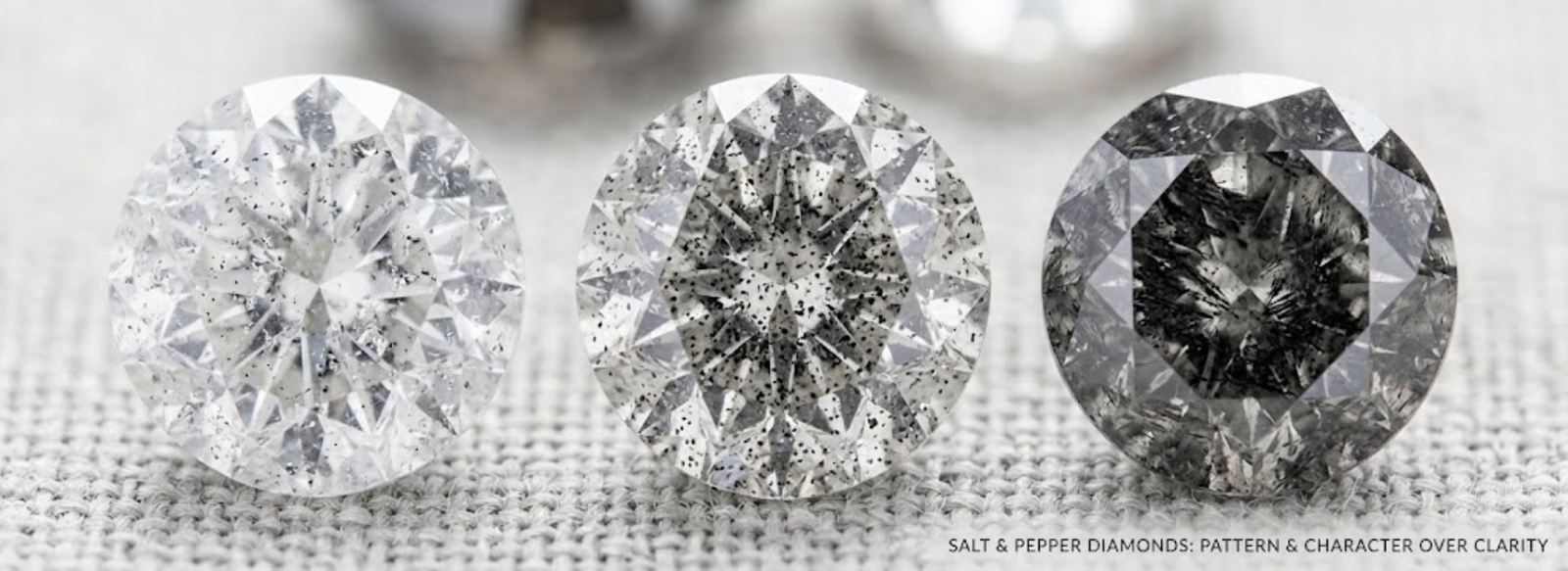
Salt and pepper diamonds flip the goal. The inclusions are the feature, not the flaw being measured against. Applying the same clarity-first logic to a stone chosen for its inclusions is like grading a tweed jacket on how smooth the fabric is. The texture is the point.
How the 4Cs Actually Apply
Carat
Carat weight works the same way it always has. It’s a straightforward measure of size, and it still plays a real role in price, especially since salt and pepper diamonds often deliver more visible size per dollar than a comparable white stone.
Cut
Cut matters more here, not less. A well-cut salt and pepper diamond still catches light and shows facets, even with heavy inclusions. A poor cut can make an otherwise striking stone look flat and lifeless.
Color
Color in this category isn’t about the yellow-to-colorless scale used for white diamonds. It’s about how the inclusions affect overall tone, from icy and pale to deep charcoal grey, which is really a description of pattern density more than pigment.
Clarity
This is where salt and pepper diamond grading breaks from tradition. Most stones land between I1 and I3, a range that would tank the value of a white diamond. Here, that range is the baseline, not a warning sign. Clarity still gets recorded, but it stops being the number that decides quality.
“Salt and pepper diamond clarity isn’t measured for the absence of inclusions. It’s read for how the inclusions are distributed and how they interact with the cut.”
Common approach among gemologists working with included and natural fancy diamonds
What Actually Determines Salt and Pepper Diamond Quality
If clarity grade isn’t the main signal, three other factors do most of the work.
Pattern Density
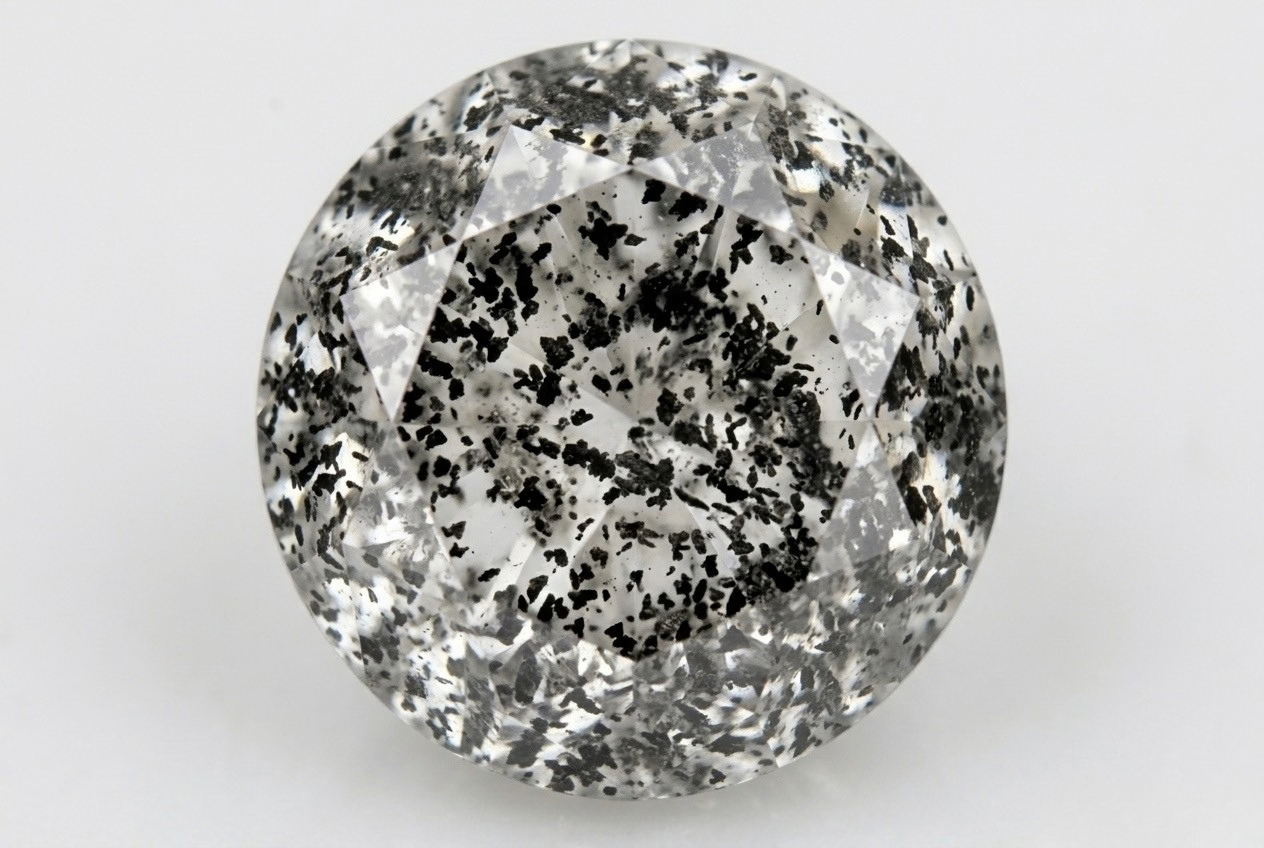
How the inclusions are distributed across the stone, whether scattered evenly or clustered, shapes how dramatic or subtle the finished look reads.
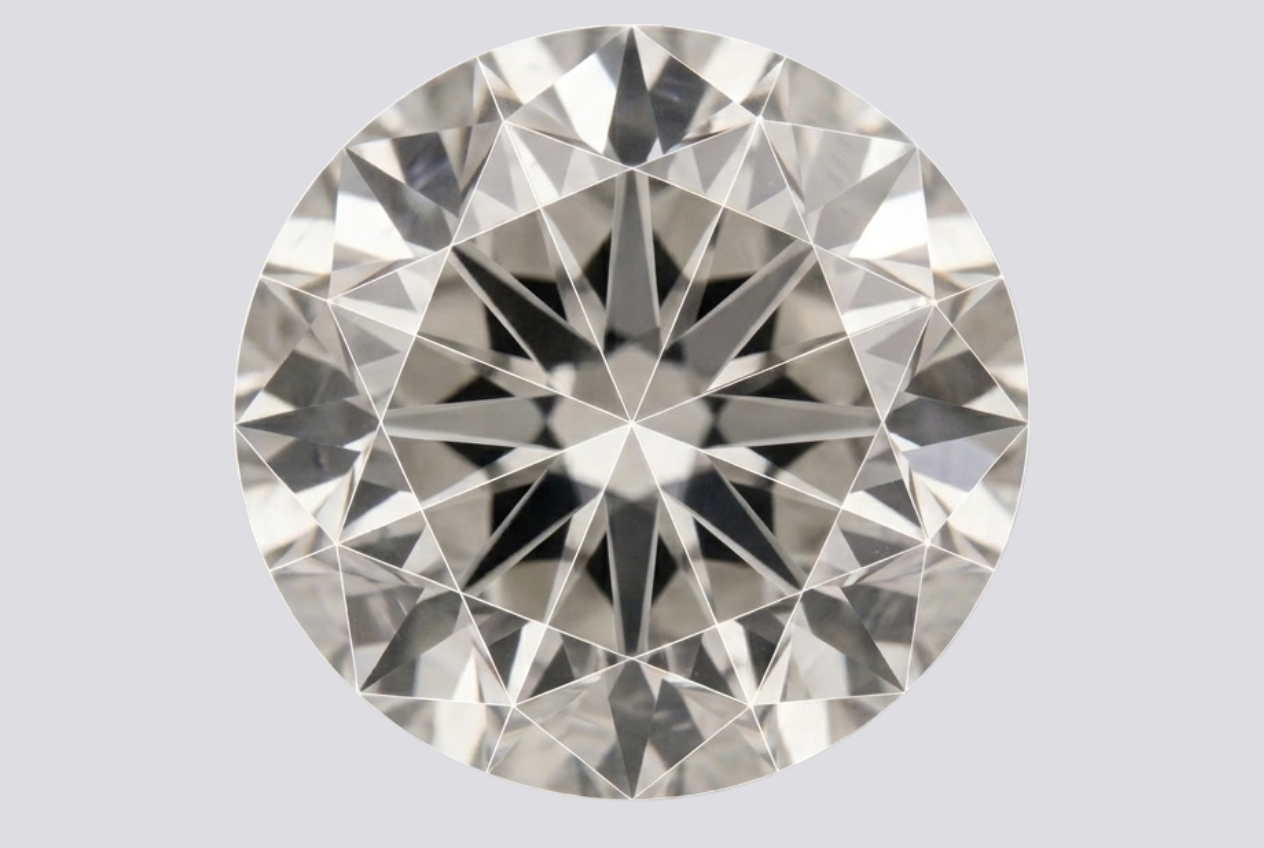
Cut Precision
A sharp, well-proportioned cut controls how much light the stone reflects, which determines whether inclusions look striking or muddy.
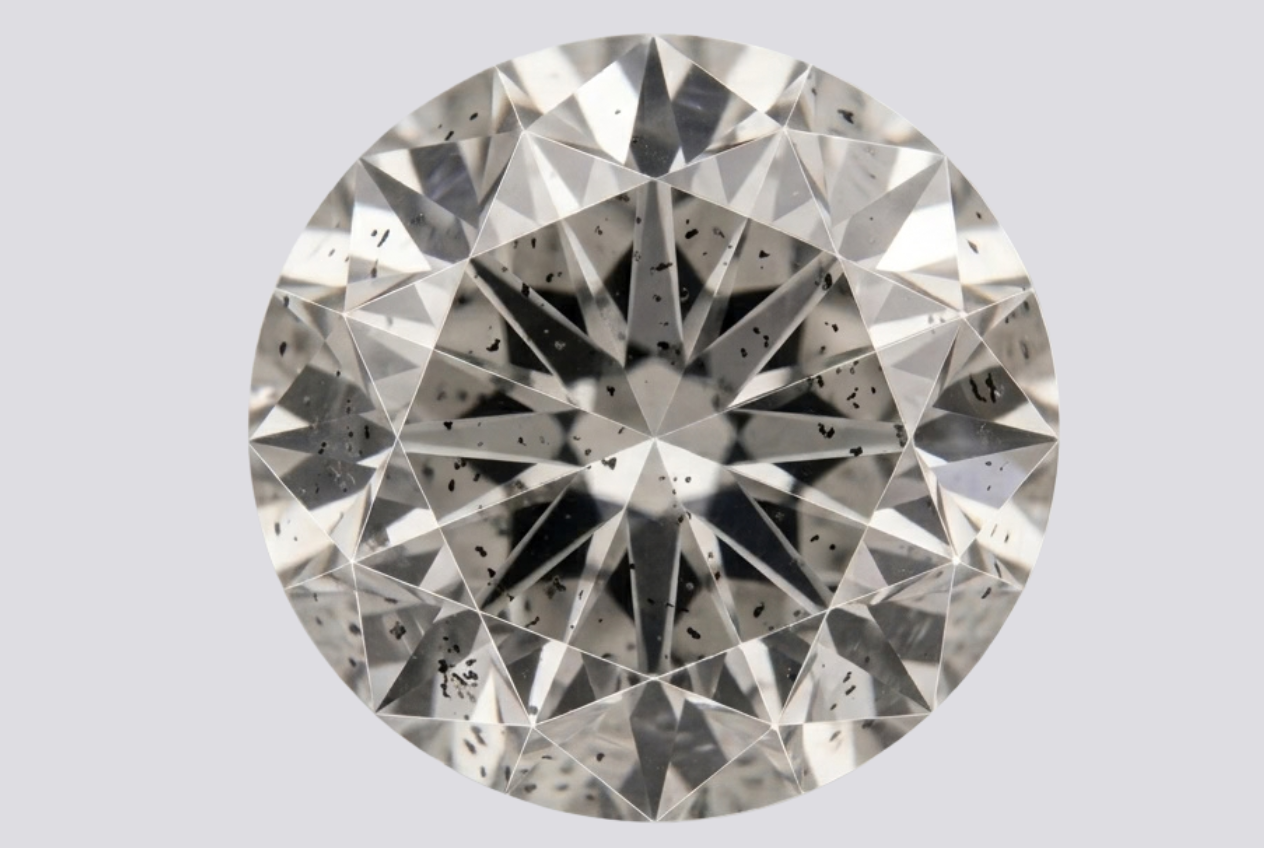
Symmetry and Balance
Even without a flawless clarity grade, a well-balanced stone with consistent proportions still reads as high quality to the eye.
Salt and Pepper Grading vs Traditional Diamond Grading
| Factor | Salt and Pepper Diamond | Traditional White Diamond |
|---|---|---|
| Clarity role | Recorded but secondary to pattern and cut | One of the biggest price drivers |
| Typical clarity range | I1 to I3 | Flawless to SI, depending on budget |
| Cut importance | High, controls how inclusions catch light | High, controls brilliance and fire |
| Color scale used | Descriptive tone (light to dark) | D to Z colorless scale |
| Main value driver | Carat size and pattern character | Combination of all 4Cs, weighted toward clarity and color |
How to Evaluate a Salt and Pepper Diamond’s Quality
- Look at the pattern in natural light. Inclusions read differently under warm indoor light versus daylight. View the stone in both before judging its overall tone.
- Check how it handles light. Turn the stone slowly and watch for sparkle between the inclusions. A strong cut still produces visible brilliance despite heavy clarity characteristics.
- Ask about symmetry. Request the stone’s proportions or symmetry grade if available. Balanced proportions matter more here than a clarity number.
- Confirm it’s a natural, graded stone. Ask for a lab report or gemologist documentation confirming the diamond is natural and detailing carat, cut, and clarity range.
Frequently Asked Questions
Do salt and pepper diamonds have a clarity grade?
Yes, but it’s rarely used as the main quality measure. Most fall in the I1 to I3 range, which is expected rather than treated as a flaw.
Does a lower clarity grade mean a lower quality stone?
No. Quality depends more on pattern, cut, and symmetry than on clarity grade alone.
Can two salt and pepper diamonds have the same grade but look totally different?
Yes. Two stones can share a similar clarity range and carat weight while looking nothing alike, since inclusion pattern is not standardized.
For a closer look at how these stones are sourced and set, read our guide on what a salt and pepper diamond means and where the pattern comes from.
Browse Graded Loose Stones
2.63ct Round Brilliant
Dark, salt-forward pattern
2.33ct Hexagon Cut
Balanced grey diamond tone
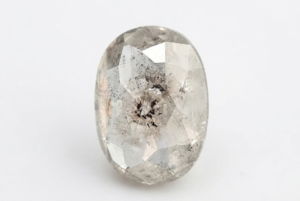
3.69ct Oval Cut
Dense, charcoal-toned pattern
The Short Version
Salt and pepper diamond grading still runs through the 4Cs, but clarity stops being the deciding factor. Pattern, cut precision, and symmetry carry more weight than a clarity number ever could for this category. Once you know what to look for, comparing stones gets a lot easier.
Ready to compare stones by pattern, cut, and character?