
The short answer: a fancy white diamond is a natural diamond that looks white, milky or opalescent because of tiny inclusions inside it. It is not a very good colourless diamond, and it is not meant to be one. GIA classes it as a fancy colour, apart from the D-to-Z scale.
Imagine holding a diamond up to a window and seeing a quiet, silvery-blue glow instead of fire and flashes. That is the first thing people notice about a fancy white diamond, and it is why some fall for it at once while others are confused.
If you came here after seeing the words “milky white diamond” or “opalescent diamond” in a listing, this guide is for you. We explain what a fancy white diamond is, why it looks the way it does, how GIA reports it, and what to check before you buy. We also introduce four stones from our collection, TC-258 to TC-261.
Table of Contents
What is a fancy white diamond?
A fancy white diamond is a natural diamond whose white appearance comes from what is inside it, not from a lack of colour. Most white diamonds sold in jewellery are graded D to Z, where D is the most colourless and the scale drifts toward faint yellow or brown. A fancy white diamond sits outside that scale. GIA treats it as a fancy colour, in the same family as pink, blue or yellow diamonds, because its colour effect is unusual and comes from a different cause.
The look runs from slightly hazy to fully opaque. Some stones are transparent enough to show a little sparkle, some are translucent like frosted glass, and some are solid white like polished porcelain. Buyers describe them as milky, pearly, silky or opalescent. All of those words point at the same soft, even glow.
NaturalFormed in the earth, with no treatment needed for the milky look.
Fancy colourGraded apart from D to Z, because inclusions create the white.
OpalescentLight scatters softly inside, giving a bluish, pearly glow.
Why a fancy white diamond looks milky and opalescent
The secret is inclusions so small you cannot see them one by one. GIA research links the milky look mainly to nano-inclusions containing nitrogen, each roughly 20 to 200 nanometres across. A nanometre is a billionth of a metre, so these particles are far smaller than the wavelength of visible light.
When light enters a clear diamond, it travels through and bounces back out as sparkle. In a fancy white diamond, light meets a dense cloud of these particles and scatters in every direction. That scattering is what makes the stone glow from within, often with a faint blue tint, much as it does in a moonstone or a natural opal. GIA also notes that the stone’s colour comes from its inclusions, which is why the colour and clarity of these diamonds are hard to separate.
It is not a flaw to be graded away. The inclusions are the colour.
How a fancy white diamond gets its milky glow
Light does not pass through. It scatters.
Colourless diamond (D to Z)
- Transparent, with sharp sparkle
- Colour comes from tiny atomic-scale effects
- Valued for how close it is to no colour
- Graded with the 4Cs, including clarity
Fancy white diamond
- Hazy, milky or opaque, with a soft glow
- White comes from dense nano-inclusions
- Valued for the character of its glow
- Classed as a fancy colour, outside D to Z
Infographic: how light behaves in a colourless diamond versus a fancy white diamond.
Fancy white diamond vs colourless diamond
People often assume a fancy white diamond is a lower-quality version of a colourless one. It is better to think of the two as different stones with different appeal. This table shows the main differences.
| Feature | Colourless (D to Z) | Fancy white |
|---|---|---|
| Look | Clear, bright, sharp sparkle | Soft, milky, pearly glow |
| Transparency | Transparent | Transparent to translucent to opaque |
| Source of colour | Atomic-scale effects | Dense nano-inclusions |
| How it is judged | The 4Cs, with colour from D to Z | Fancy colour, by appearance and transparency |
| Best loved for | Brilliance and fire | Character and softness |
How GIA reports a fancy white diamond
If you search for a white diamond GIA report, you want the document that tells you what you are really buying. For these stones there are two possible reports, and the difference matters.
Colored Diamond Grading report
GIA issues this when a stone is transparent enough to evaluate. It names the colour, such as Fancy White, and describes the stone in detail.
Identification and Origin report
Many opaque or heavily included stones receive this instead. It confirms the stone is natural and not treated or synthetic, and identifies the source of its colour.
GIA’s own research found that only about 30 per cent of recent fancy white and fancy black submissions received a grading report, so seeing an Identification and Origin report is common and not a warning sign. Clarity grades are also given for only a small share of these stones, and almost all of those fall in the Included range. That is expected, since the inclusions create the colour.
These diamonds are also rare. GIA reports that fewer than 2,000 natural fancy white and fancy black diamonds combined have been submitted to it since 2008. Always ask which report a stone has, and read it before you decide.
Who chooses a fancy white diamond?
Fancy white diamonds attract people who want something that feels personal rather than expected. Three kinds of buyer come up often:
- The quiet minimalist. She likes a ring that looks calm and refined, and finds a very bright stone too loud.
- The pearl and moonstone lover. He or she already wears soft, glowing gems and wants a diamond with the same character.
- The collector. They are drawn to the rarity and want a natural stone that few other people own.
Settings matter here. A bezel or low-profile setting keeps the focus on the glow, while a warm metal such as yellow or rose gold adds contrast. Very busy settings can compete with the stone’s softness.
Meet our stock
Four stones from our collection, shown so you can see how different the same family of stone can look. Click each image block to add the stone photo, then fill in the details from your stock sheet.
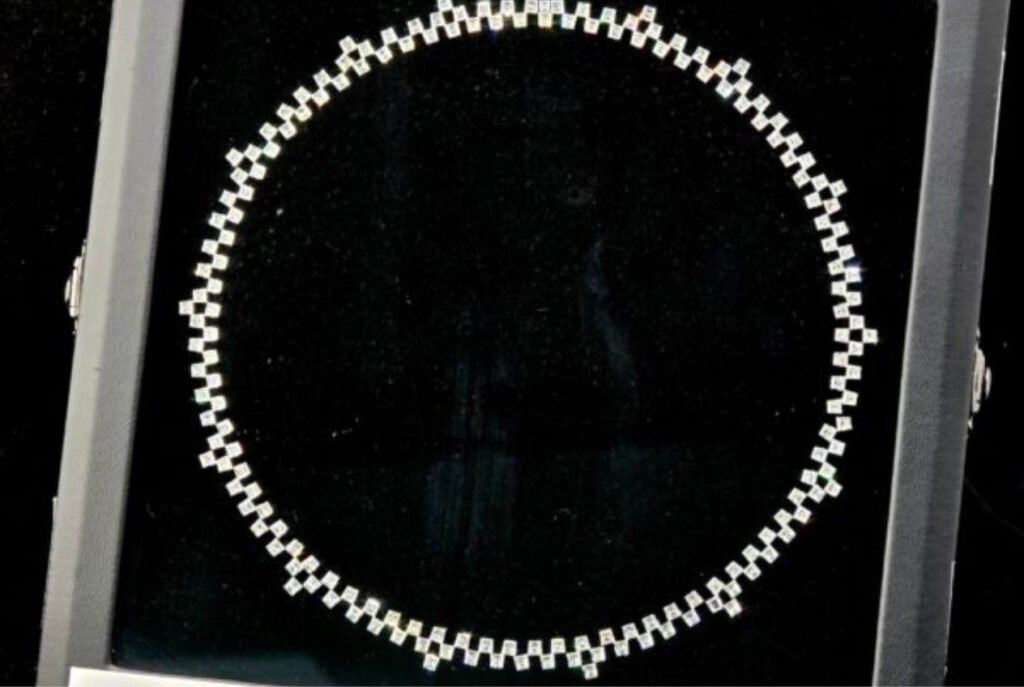
TC-028
Shape: Trapezoid
Carat: 23.37ct (179pcs)
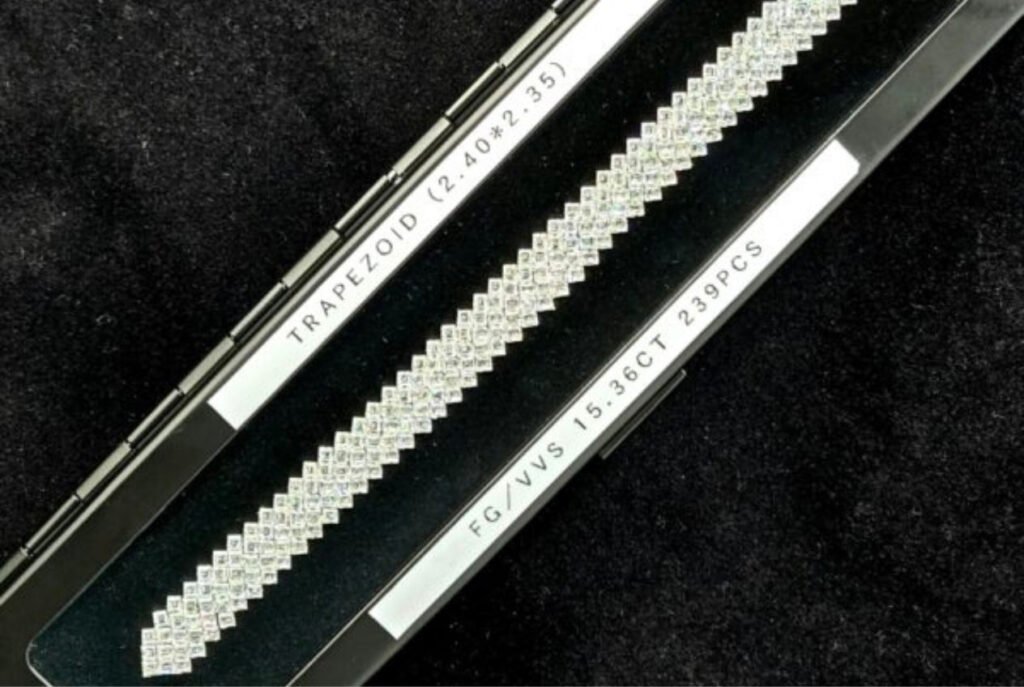
TC-182
Shape: Trapezoid
Carat: 15.36ct (239pcs)
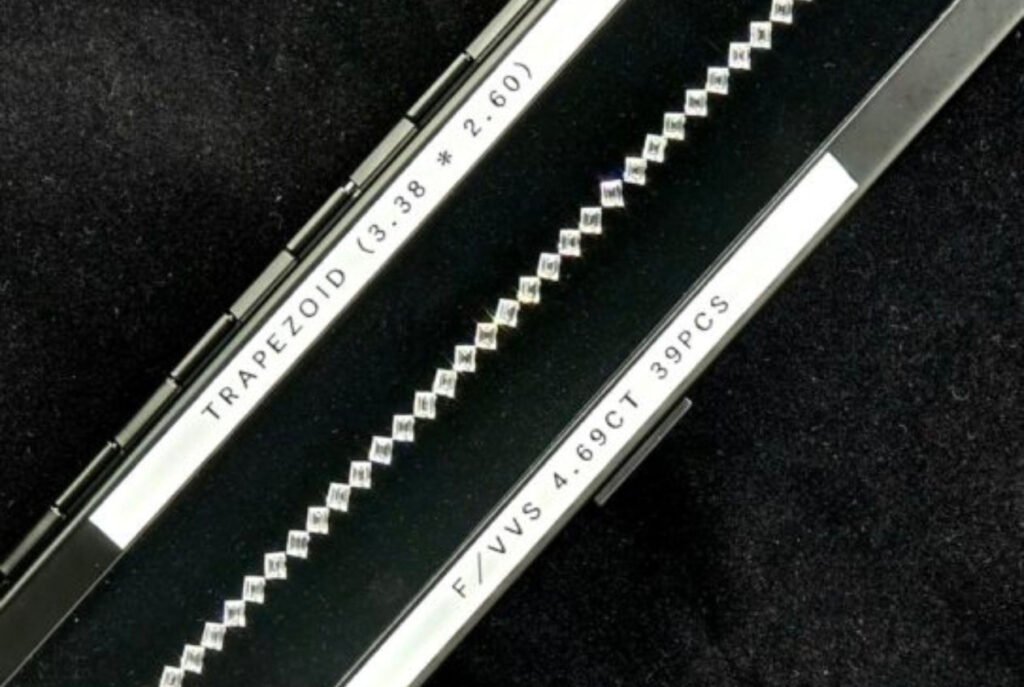
TC-107
Shape: Trapezoid
Carat: 4.69ct (39pcs)
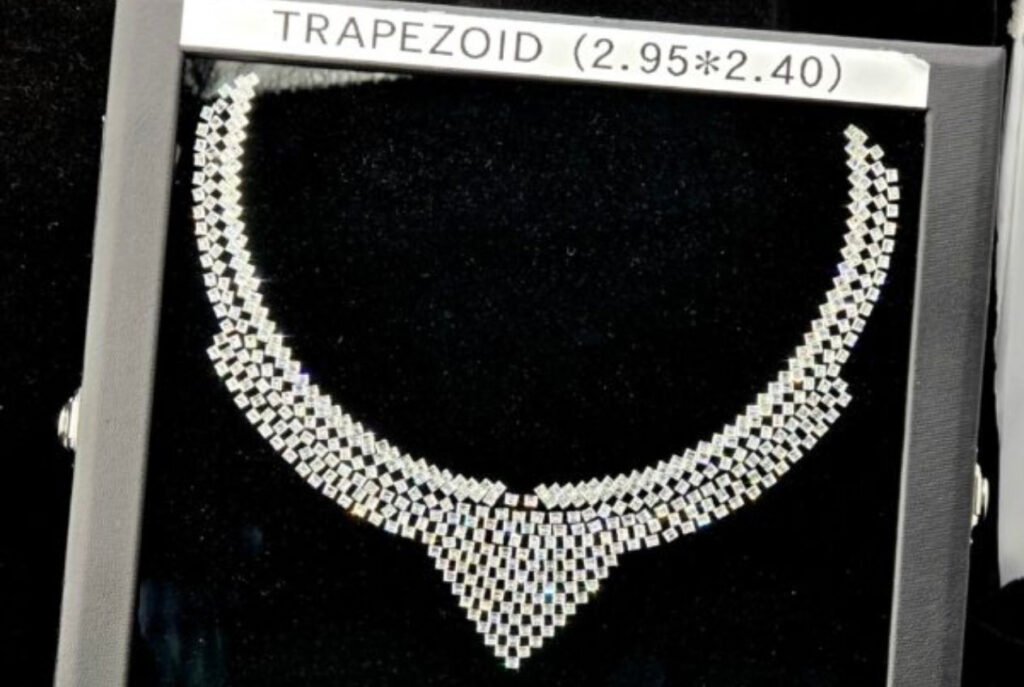
TC-030
Shape: Trapezoid
Carat: 17.37ct (97pcs)
Every fancy white diamond is different. Ask us for a daylight video of any stone, and for a copy of its GIA report.
How to choose a fancy white diamond
Because these stones vary so much, a few simple checks will help you find one you will love for years:
- Check the report type. Know whether the stone has a grading report or an Identification and Origin report, and read what it says.
- Judge the transparency. Decide whether you prefer a hazy stone with some sparkle or a fully opaque, pearl-like one.
- View it in daylight. Soft, scattered light shows a milky stone best, so ask for a video in natural light.
- Compare more than one. The glow differs from stone to stone, so look at several side by side.
- Plan the setting early. A bezel or low-profile design protects the stone and lets the glow lead.
If you are weighing a fancy white diamond against a clearer stone, our guide to fancy white vs colourless diamonds walks through the decision step by step.
Still deciding?
Compare fancy white and colourless diamonds on look, value and everyday wear.
Ready to look?
Browse GIA reported fancy white diamonds, each with its report details.
Frequently asked questions
What is a fancy white diamond?
A fancy white diamond is a natural diamond whose white, milky or opalescent look comes from tiny inclusions inside the stone rather than from the atomic-scale colour effects behind the D-to-Z scale. GIA treats it as a fancy colour, separate from colourless diamonds.
Is a fancy white diamond the same as a colourless diamond?
No. A colourless diamond is clear and is graded D to Z for how little colour it shows. A fancy white diamond is hazy or milky by nature and is not placed on that scale.
Why does a fancy white diamond look milky?
Dense nano-inclusions inside the stone scatter light in every direction. This produces a soft, bluish, opalescent glow instead of the sharp sparkle of a transparent diamond.
Does GIA give fancy white diamonds a colour grade?
It depends on how transparent the stone is. GIA issues a Colored Diamond Grading report only when a stone is clear enough to evaluate. Many fancy white diamonds receive a Colored Diamond Identification and Origin report instead, which confirms the stone is natural and identifies the source of its colour.
Are fancy white diamonds rare?
Yes. GIA reports that fewer than 2,000 natural fancy white and fancy black diamonds combined have been submitted to it since 2008, which is a tiny share of the diamonds it examines.
How do I choose a fancy white diamond?
Check which GIA report the stone has, look at it in daylight through video or in person, compare how transparent each stone is, and pick a setting that suits its soft glow. A bezel or low-profile setting often flatters a milky stone.
Find the glow that feels like yours
Browse natural fancy white diamonds with GIA reports, and ask us for daylight videos of any stone.
About this guide. Written by the Your Brand Name gemmology team, which sources and describes GIA reported loose diamonds. Facts about causes, reports and rarity come from GIA research and are cited below.
Sources: GIA, Natural-Color Fancy White and Fancy Black Diamonds and Gem Guide, Fancy White Diamonds.