

From 1920s Paris to the geometric motifs still shaping fine jewelry today — here’s what makes Art Deco jewelry instantly recognizable.
Art deco jewelry is the geometric, high-contrast style that defined luxury design in the 1920s and 1930s — built on straight lines, symmetry, and platinum-set gemstones rather than the flowing, nature-inspired curves that came before it. It emerged out of Paris in 1925 and never really left. This piece traces where art deco jewelry came from, breaks down the design language that still defines it, and shows you exactly what to look for, whether you’re studying the style or shopping a vintage diamond necklace of your own.
Table of Contents
What Is Art Deco Jewelry?
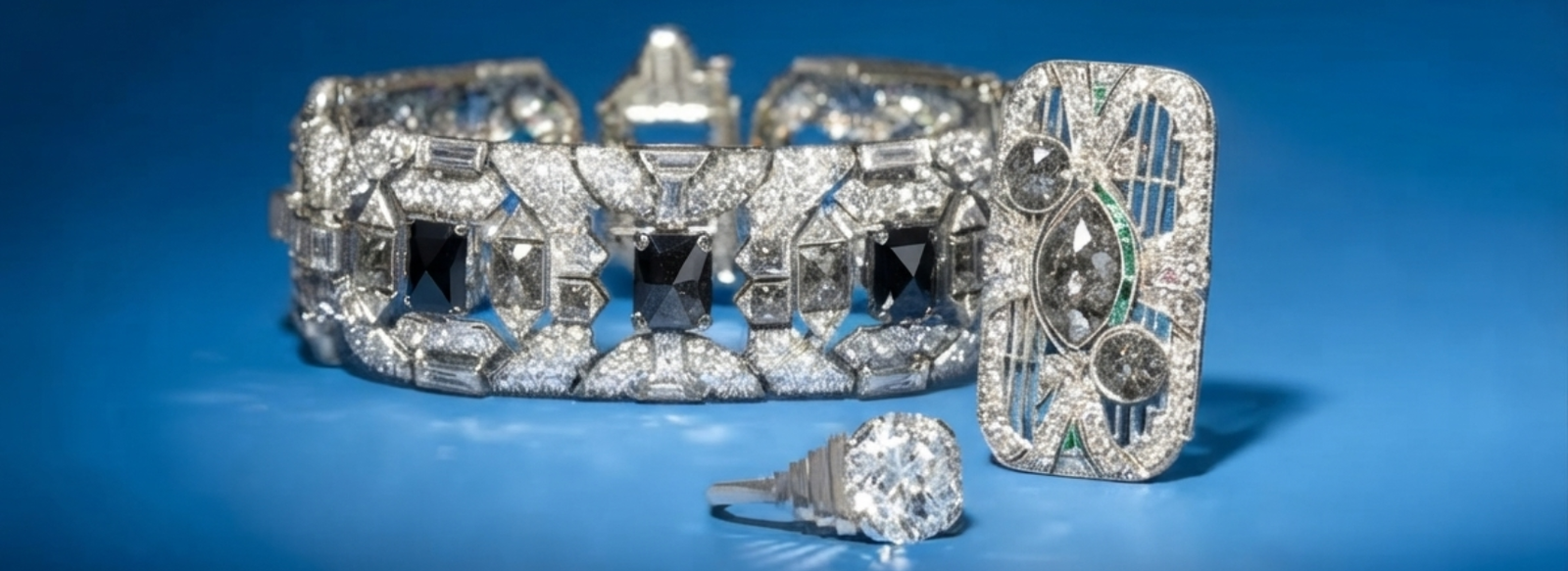
Art deco jewelry is a design style that flourished roughly between 1920 and 1935, built on geometric precision rather than organic form. It favors bold symmetry, sharp lines, and a “machine age” confidence over the soft, flowing shapes of the Art Nouveau period that preceded it.
- Geometric forms — stepped shapes, chevrons, and sunbursts replace curling vines and floral motifs
- High contrast — black onyx or enamel set against white diamonds and platinum
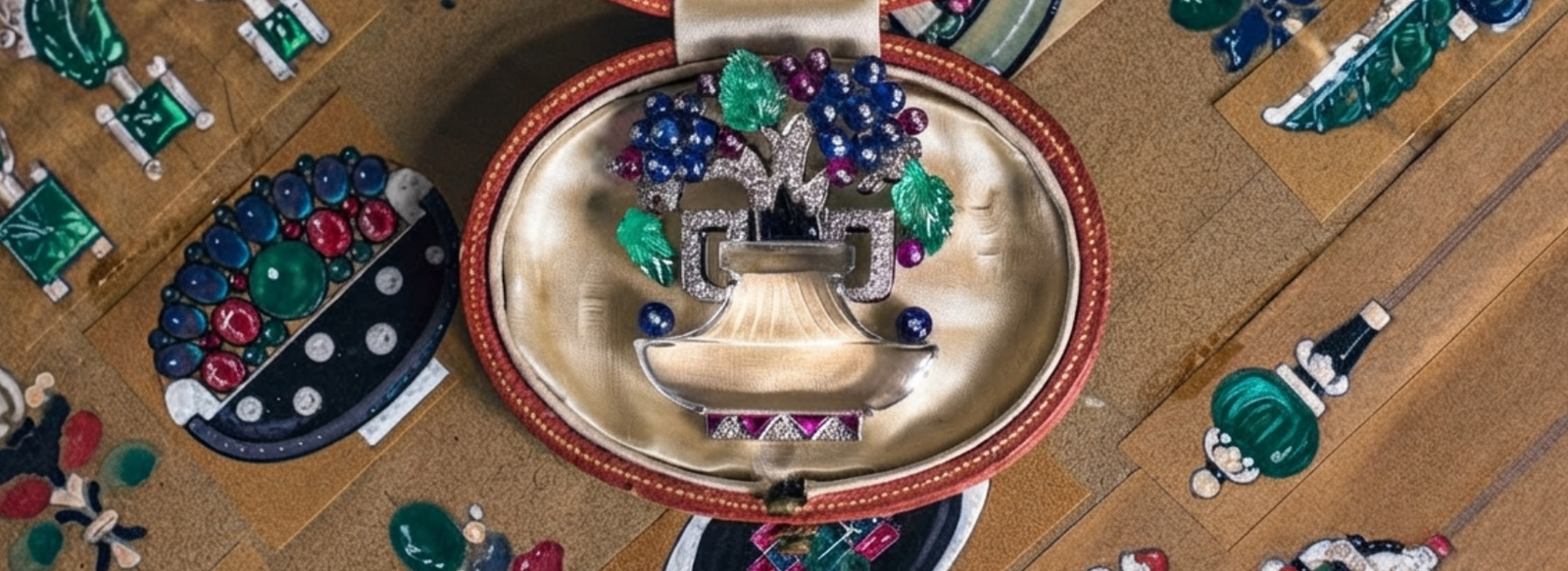
- Precision cutting — calibre-cut colored stones fitted together like tiles, with almost no visible metal between them
- Platinum settings — a stronger, whiter metal that let designers craft finer, more intricate frameworks
The Origins of Art Deco: From Paris to the World
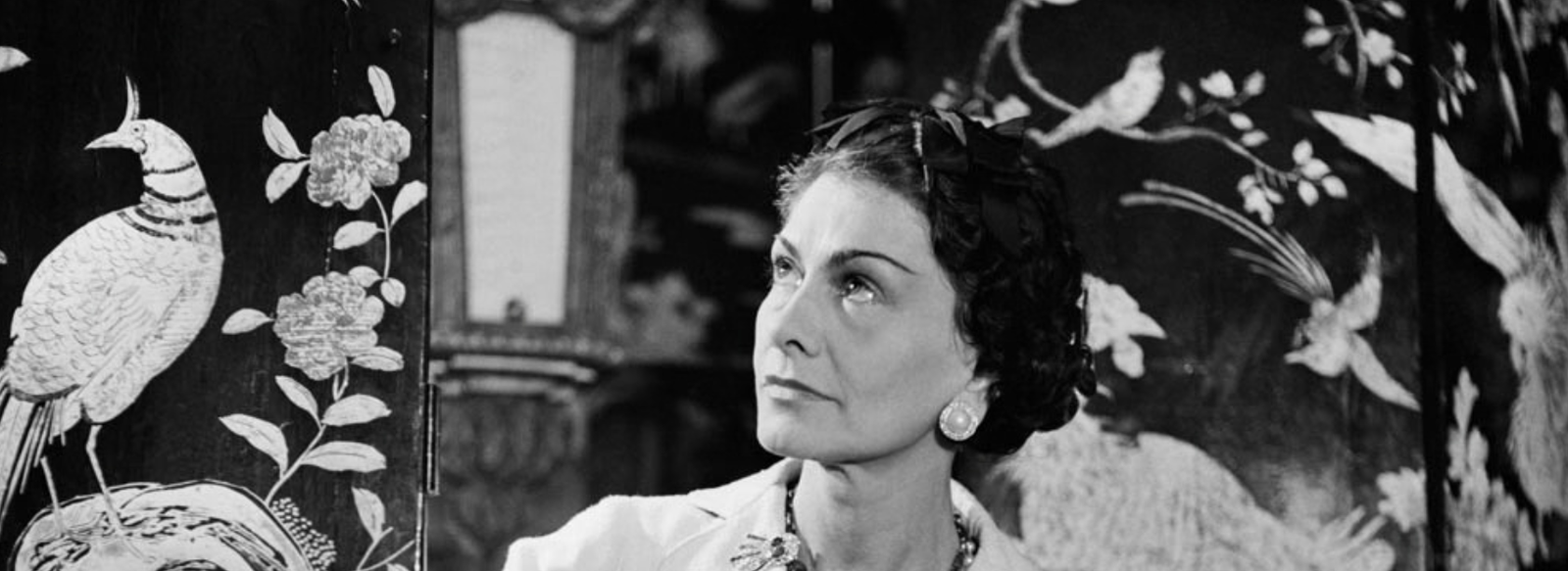
The style takes its name — retroactively, as it happens — from the 1925 Exposition Internationale des Arts Décoratifs et Industriels Modernes in Paris, a showcase of modern design that drew visitors from across Europe and America. The term “Art Deco” itself wasn’t widely used until decades later; at the time, jewelers called it simply the “moderne” style.
A handful of cultural forces converged to shape it. The optimism and speed of the post-war “Machine Age” pushed designers toward industrial precision. Cubism’s fractured, geometric picture-making found its way into brooches and clips. And the 1922 discovery of Tutankhamun’s tomb sparked an Egyptian Revival that added scarabs, lotus blossoms, and stepped pyramid shapes to the jeweler’s vocabulary.
Museums with major decorative arts holdings, including the Victoria and Albert Museum’s jewellery collection, still display period pieces that show this shift clearly: 1920s jewellery grew starker, whiter, and more architectural with each passing year, as platinum and rock crystal replaced the warmer golds of the prior decade.
The Design Language of Art Deco Jewellery
Three principles, working together, are what make a piece read as art deco jewelry at a glance.
Geometric Symmetry
Stepped forms, sunbursts, and chevrons built on a strict central axis, replacing the asymmetry of earlier styles.
Bold Contrast
Black onyx or enamel set hard against white diamonds; sapphire and emerald paired for maximum visual punch.
Precision Craft
Calibre-cut gemstones set edge to edge, fine platinum filigree, and millegrain edging for a crisp, engineered finish.
Anatomy of an Art Deco Necklace
Here’s how those principles show up on an actual piece — a labelled look at the motifs that signal art deco design at a glance.
Infographic: the five design elements that identify an authentic Art Deco necklace at a glance.
Iconic Art Deco Jewelry Pieces & Motifs
- Sautoir necklaces — long, single-strand necklaces, often finished with a geometric tassel or drop, worn low over 1920s dropped-waist silhouettes
- Cocktail rings — bold, architectural rings built to catch light from every facet, popularized as evening wear expanded in the Prohibition era
- Brooches and dress clips — often sold in pairs, pinned to lapels, belts, or hemlines for a burst of geometric detail
- Sunburst and chevron pendants — radiating line motifs that became shorthand for the entire era
If you want to go deeper on telling a genuine period piece from a later reproduction, our guide to authenticating vintage Art Deco jewelry walks through hallmarks, cut styles, and construction in more detail.
How to Identify an Authentic Vintage Art Deco Piece
Check the metal.
Platinum dominated the era; if a “deco-style” piece is yellow gold throughout, it’s more likely a later reproduction or a transitional 1930s piece.
Look at the diamond cuts.
Old European and transitional cuts, with smaller tables and higher crowns than modern round brilliants, are strong period indicators in any vintage diamond necklace.
Inspect the edges.
Millegrain — a fine beaded edge along the metal — was a hallmark finishing technique of the period.
Examine colored stone settings.
Calibre-cut sapphires or onyx, fitted edge to edge with almost no visible metal, points to genuine period craftsmanship.
Ask for a hallmark and provenance check.
A specialist appraiser can confirm maker’s marks and metal purity stamps consistent with the 1920s or 1930s.
Art Deco vs Art Nouveau: What’s the Difference?
Design Evolution
Art Deco vs. Art Nouveau
A side-by-side look at the shift from organic nature to machine-age precision.
Art Nouveau
The Organic Movement
- Line Quality: Flowing, organic curves & whiplash lines
- Inspiration: Nature — flowers, insects, the female form
- Color Palette: Soft, muted, naturalistic tones
- Signature Metal: Yellow gold, warm tones, enamel
- Typical Motifs: Dragonflies, orchids, flowing hair
Art Deco
The Geometric Era
- Line Quality: Straight lines, sharp geometry, symmetry
- Inspiration: Cubism, Egyptian Revival, machine age
- Color Palette: High contrast — black & white, bold primaries
- Signature Metal: Platinum, white gold
- Typical Motifs: Sunbursts, chevrons, stepped pyramids
Art Deco’s Influence on Jewelry Today
A century on, art deco jewelry remains one of the most quoted design languages in the industry. Contemporary designers still reach for its stepped forms, calibre-cut lines, and confident symmetry when they want a piece to feel architectural rather than decorative.
That’s exactly the tradition behind our own art deco leaf necklace: a stylized, symmetrical leaf silhouette built on the same sunburst-and-line logic that defined the originals, set in a clean, contemporary platinum finish. It’s less a costume-piece throwback than a genuine continuation of the design language this article has walked through.
Where Art Nouveau asked jewelry to imitate nature, Art Deco asked it to imitate precision itself.
— a common summary among jewelry historians of the movement’s core shift
FAQs
What defines Art Deco jewelry style?
Art Deco jewelry is defined by geometric symmetry, bold color contrast, and precision craftsmanship in platinum. Straight lines, stepped forms, sunbursts, and chevrons replaced the flowing curves of earlier styles.
What years are considered the Art Deco period?
The Art Deco period runs roughly from 1920 to 1935, peaking after the 1925 Exposition Internationale des Arts Décoratifs in Paris, which gave the movement its name.
What’s the difference between Art Deco and Art Nouveau jewelry?
Art Nouveau favors flowing, organic lines inspired by nature, while Art Deco favors geometric symmetry, straight lines, and bold contrast inspired by cubism and the machine age.
Is Art Deco jewelry a good investment?
Genuine period pieces are prized by collectors for their craftsmanship and historical significance, and well-preserved examples have generally held or increased in value, though individual results depend on maker, condition, and gemstone quality.
How can you tell if a diamond necklace is genuinely Art Deco?
Look for platinum settings, old European or transitional cut diamonds, millegrain edging, calibre-cut colored stones, and hallmarks consistent with the 1920s to 1930s, ideally confirmed by a specialist appraiser.
Shop the Art Deco Necklace
See the geometric symmetry and sunburst detailing from this guide in a piece built for everyday wear.