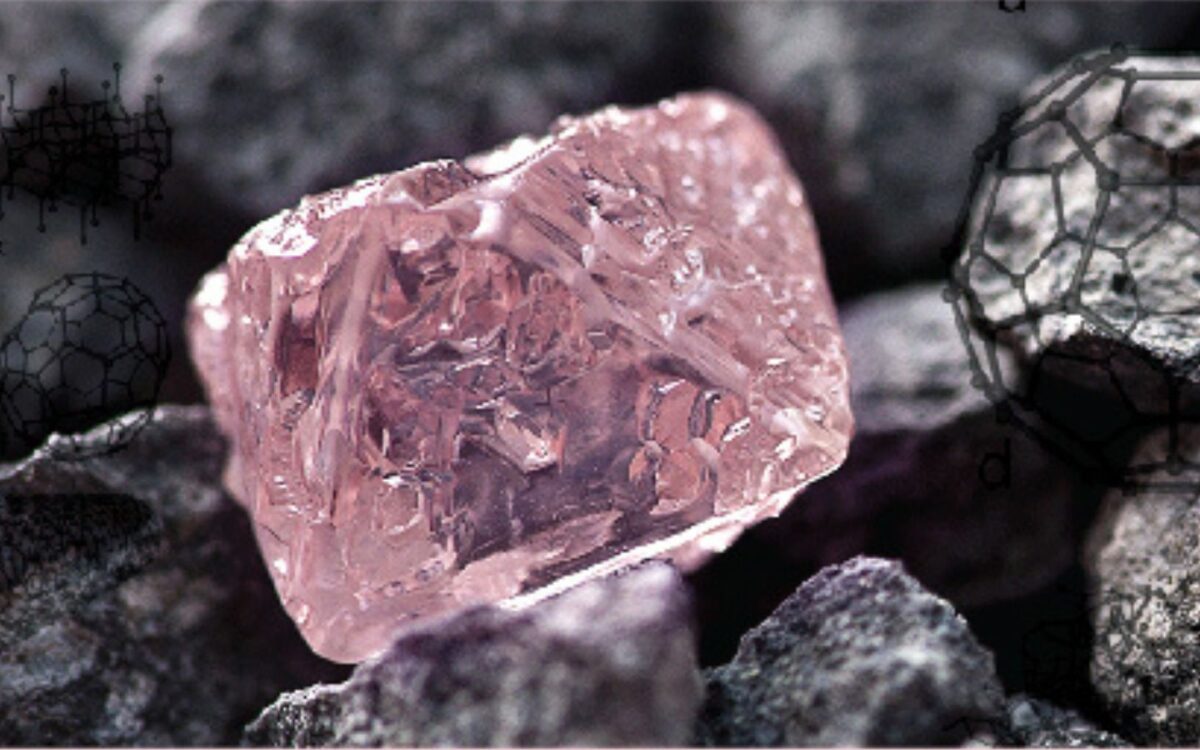
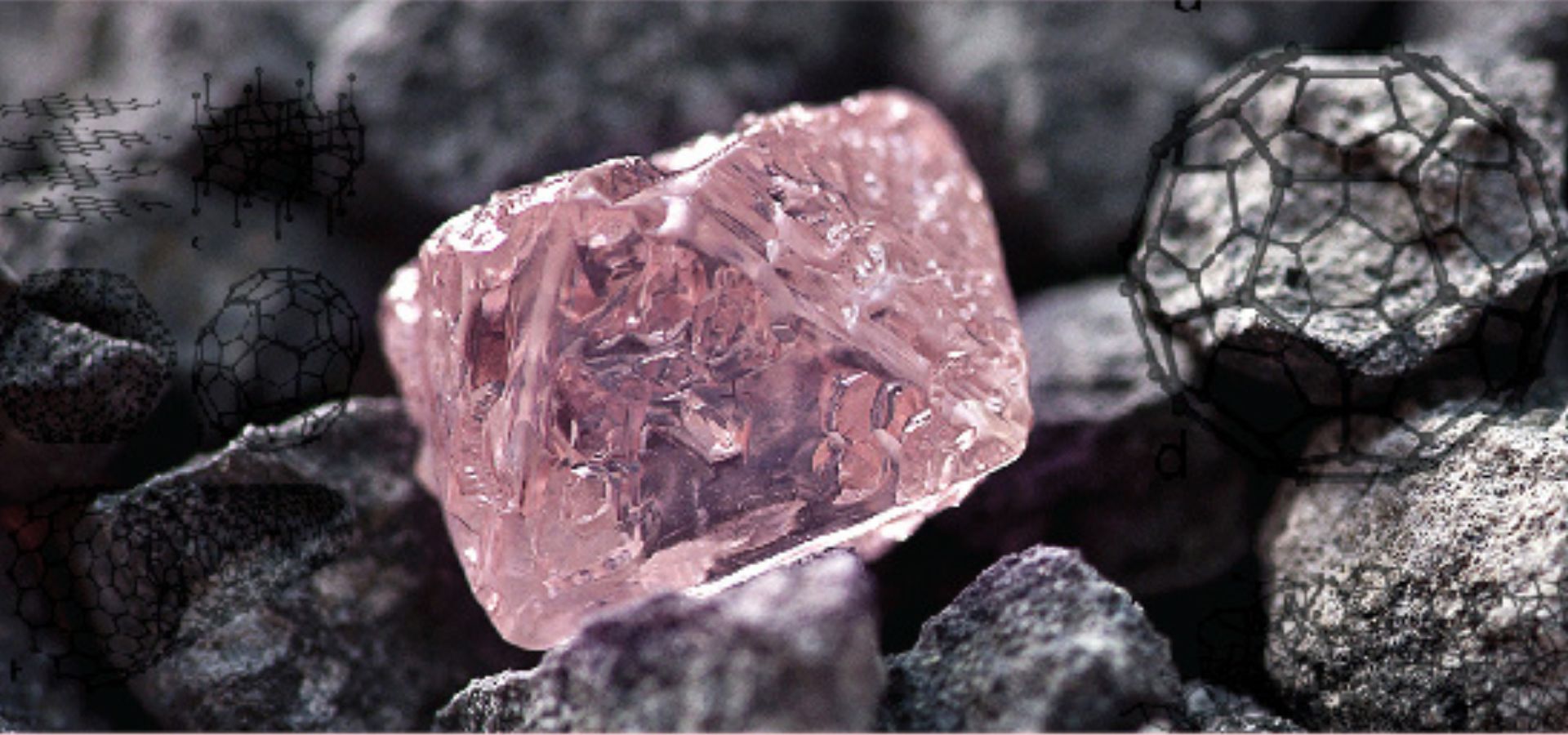
Pink diamonds are among the rarest gemstones on earth. Natural pink diamonds are so scarce that less than one in 10,000 mined diamonds shows a true pink hue, and since the Argyle Mine in Australia closed in 2020, supply has effectively dried up.
Lab-grown pink diamonds now offer the same colour and quality at a far more accessible price. Whether natural or lab-grown, we will cover everything you need to know before buying.
What Makes a Diamond Pink?
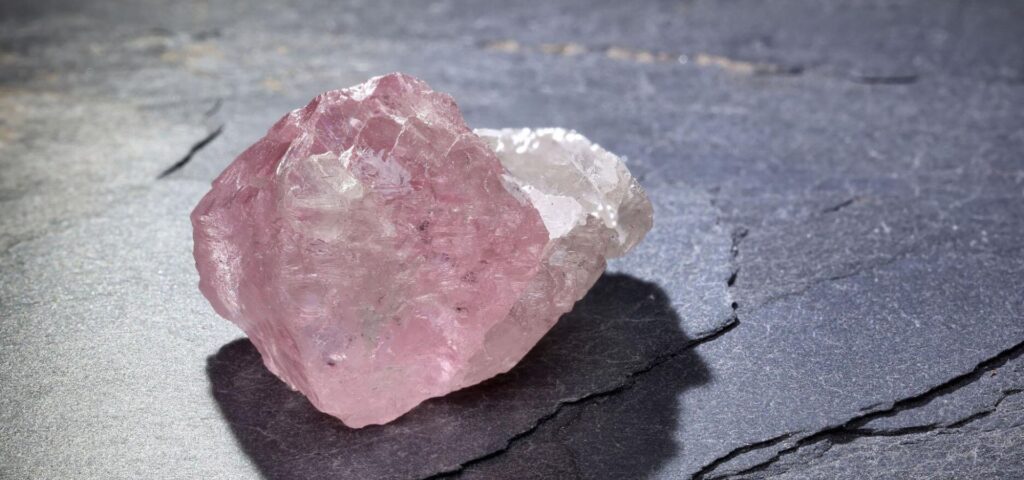
Most coloured diamonds get their colour from trace elements. Blue diamonds contain boron. Yellow diamonds contain nitrogen. Pink diamonds are different – scientists have no definitive answer as to why they are pink.
The leading theory points to a structural distortion in the diamond’s crystal lattice. During formation deep in the earth, extreme pressure alters the atomic structure of the stone. This distortion changes how the diamond absorbs and reflects light, producing a pink or reddish-pink colour. There are no trace elements involved – it is purely a physical phenomenon, which is part of why pink diamonds remain scientifically interesting long after other coloured stones have been fully explained.
This also makes pink diamonds exceptionally difficult to produce synthetically. In lab-grown pink diamonds, the pink colour is typically introduced through a post-growth treatment process that alters the crystal structure in a controlled way, mimicking the conditions that occur naturally over millions of years.
How Rare Are Natural Pink Diamonds?
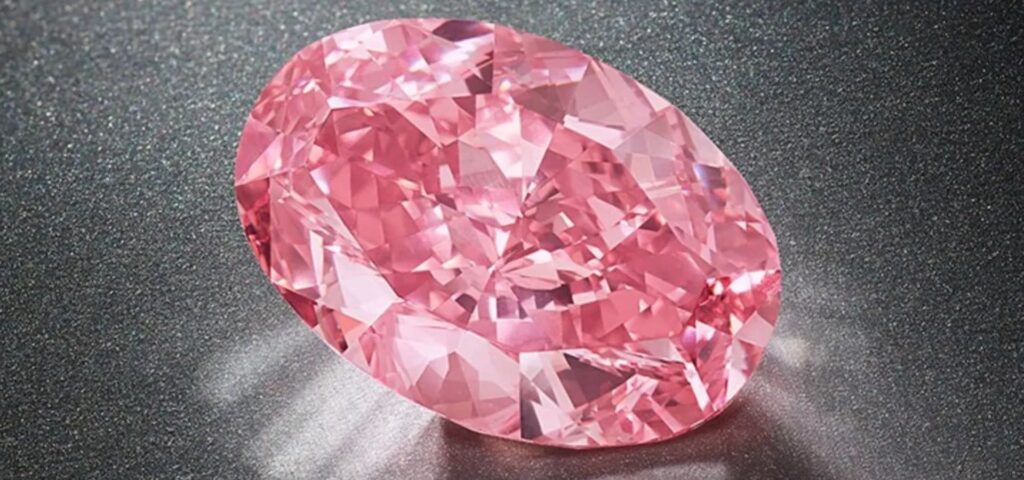
Very rare, and the numbers are worth knowing before you shop.
Fewer than one in every 10,000 mined diamonds shows a detectable pink hue. Of those, only a tiny fraction display the kind of strong, vivid colour that commands serious attention. For decades, around 90% of the world’s supply of natural pink diamonds came from a single source – Rio Tinto’s Argyle Mine in the Kimberley region of Western Australia.
The Argyle Mine closed in November 2020 after 37 years of production. With it went the vast majority of the world’s supply of natural pink diamonds. Stones that were already rare became rarer overnight. Prices for certified natural pink diamonds have risen sharply since closure, particularly for stones in the fancy and vivid colour grades.
What this means practically: if you are buying a natural pink diamond, you are buying into a supply chain that is genuinely finite. New sources are limited and none come close to matching what Argyle produced in volume or quality.
Natural vs Lab-Grown Pink Diamonds: What Is the Difference?
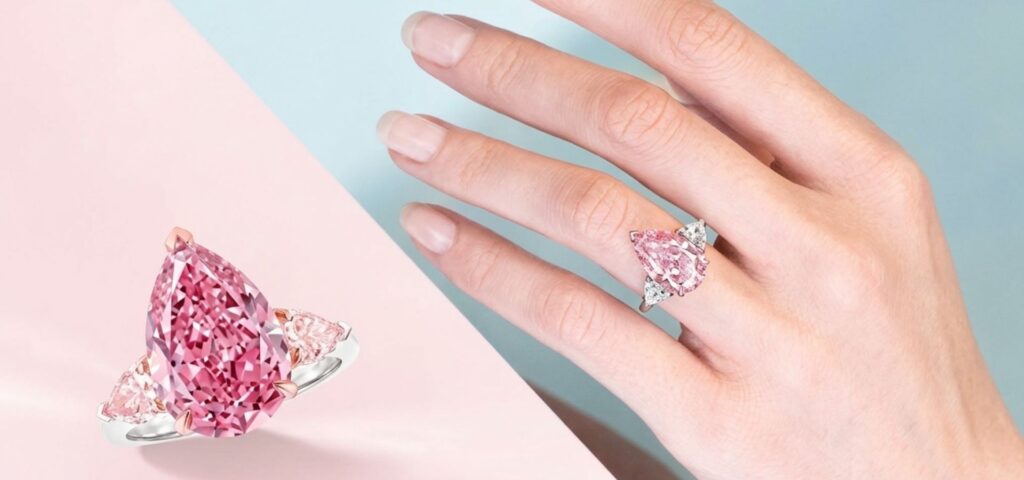
This is the question most buyers arrive with, and it deserves a straight answer.
Chemical and Physical Properties
A lab-grown pink diamond is chemically, physically, and optically identical to a natural pink diamond. Both are pure carbon in a cubic crystal structure. Both score 10 on the Mohs hardness scale. Both are graded using the same colour and clarity standards. A gemological test cannot tell them apart without specialist equipment.
How They Are Made
Natural pink diamonds form over billions of years under extreme geological conditions. Lab-grown diamonds are created in controlled environments using one of two methods – High Pressure High Temperature (HPHT) or Chemical Vapour Deposition (CVD) – and typically take a few weeks to a few months to grow. The pink colour in lab-grown stones is usually applied through post-growth irradiation and annealing.
Price
This is where the difference is significant. A natural fancy vivid pink diamond of one carat can sell for hundreds of thousands of dollars, sometimes millions, depending on colour saturation, clarity, and provenance. A lab-grown pink diamond of the same size and colour grade is a fraction of that cost – typically 90% to 95% less than an equivalent natural stone.
Value Over Time
Natural pink diamonds have shown strong price appreciation, particularly post-Argyle. Lab-grown diamonds, like most lab-grown gemstones, have seen prices fall as production technology improves and supply increases. If investment potential matters to you, natural is the relevant category. If you want the look and quality of a pink diamond as a piece of jewellery without the investment premium, lab-grown makes complete sense.
Understanding Pink Diamond Colour Grades
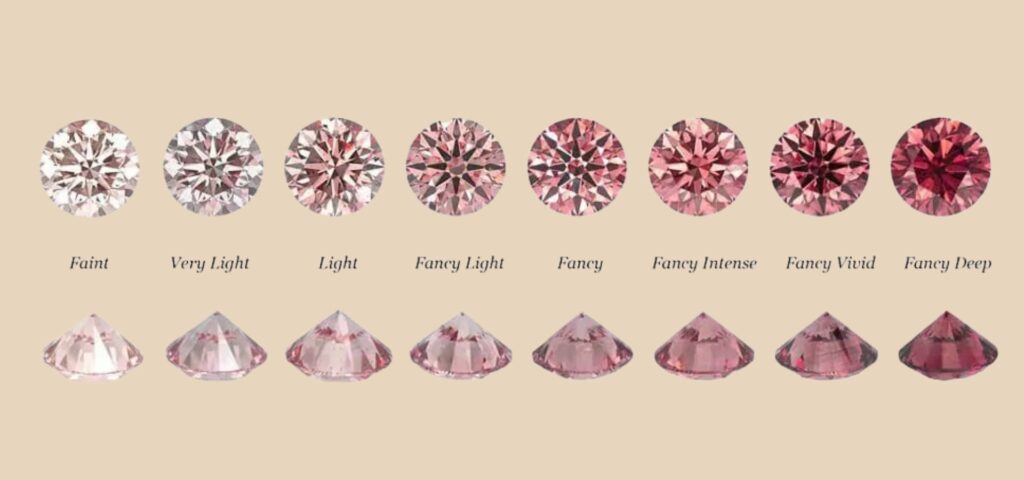
Pink diamonds are graded on the same scale as other fancy colour diamonds, developed by the GIA. Colour intensity is the single most important factor in value.
The grades from lightest to most intense are:
- Faint Pink
- Very Light Pink
- Light Pink
- Fancy Light Pink
- Fancy Pink
- Fancy Intense Pink
- Fancy Vivid Pink
- Fancy Deep Pink
- Fancy Dark Pink
Fancy Vivid Pink is the most sought-after grade and commands the highest prices by a considerable margin. Even a small difference in grade – say, from Fancy Intense to Fancy Vivid – can mean a dramatic jump in cost.
Secondary hues also matter. Pink diamonds often carry modifiers such as “purplish,” “orangy,” or “brownish.” A Fancy Vivid Purplish Pink reads differently from a Fancy Vivid Pink, and preferences vary. Some buyers prefer the warmth of a purplish pink. Others want a pure, cool pink without any secondary hue.
At Terra Company HK, we work across the full range of pink colour grades and can help you identify which sits within your budget while still delivering the visual impact you are after.
Pink Diamond Cuts: Which Shape Works Best?
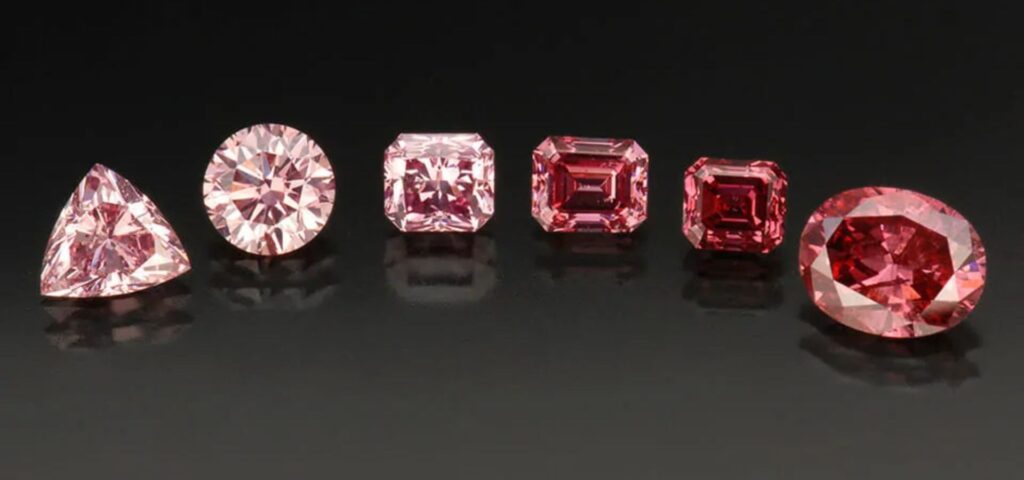
Cut choices for pink diamonds are slightly different from white diamonds, for one key reason: colour retention. The cut needs to hold and display the pink as effectively as possible, which sometimes means prioritising depth and geometry over pure brilliance.
Round Brilliant
The most popular diamond cut overall, and it works well for pink diamonds too. The faceting pattern maximises light return, which helps saturate the pink colour throughout the stone. Round pinks tend to look consistently pink from all angles, which is not always guaranteed in other shapes.
Oval
Oval cuts are extremely popular for pink diamond engagement rings. They elongate the appearance on the finger, tend to show colour well across the larger surface area, and suit a wide range of ring styles from modern to vintage-influenced.
Cushion
The cushion cut has historically been associated with fancy colour diamonds and works particularly well with pinks. The rounded corners and larger facets hold colour effectively and give a romantic, soft appearance.
Radiant
The radiant cut was actually developed with fancy colour diamonds in mind. Its mixed-cut faceting pattern – combining step and brilliant facets – is particularly effective at concentrating colour in the centre of the stone. If colour saturation is your priority, radiant is worth serious consideration.
Pear and Marquise
Both elongated shapes, and both popular for pink diamonds. They suit pendants and drops particularly well. In rings they read as distinctive and non-traditional, which is exactly what many pink diamond buyers are looking for.
Pink Diamond Clarity: How Much Does It Matter?
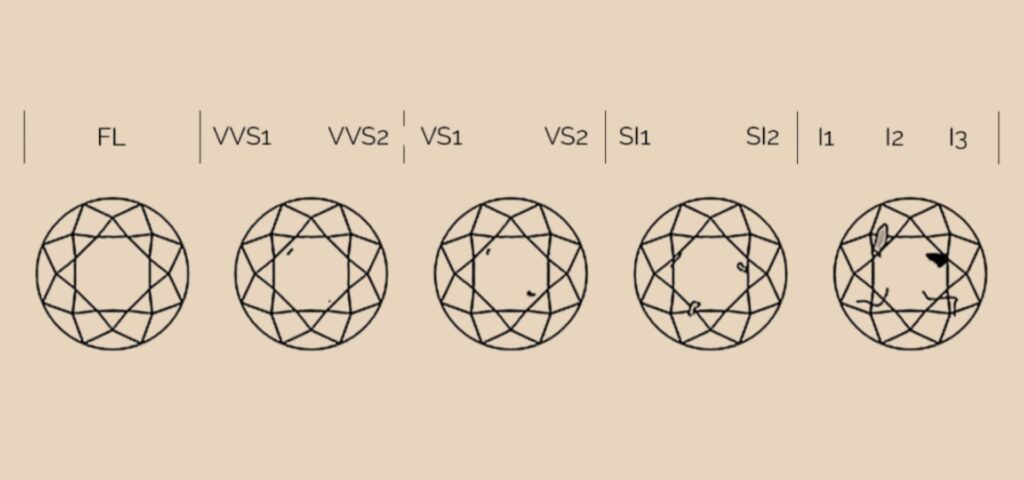
Clarity is less critical for pink diamonds than for white diamonds. The reason is simple: colour is so dominant in a well-saturated pink stone that minor inclusions are far less visible than they would be in a colourless diamond.
Most buyers aim for VS2 or SI1 clarity as a practical baseline – inclusions not visible to the naked eye, no structural concerns. Going higher than VS1 on clarity for a pink diamond is rarely necessary unless the stone is being purchased as an investment and you want the cleanest certification possible.
What to avoid: inclusions at the girdle or table that could weaken the stone structurally, or large dark inclusions that disrupt the colour. These should be flagged clearly by any reputable seller.
Pink Diamond Certification: What to Look For
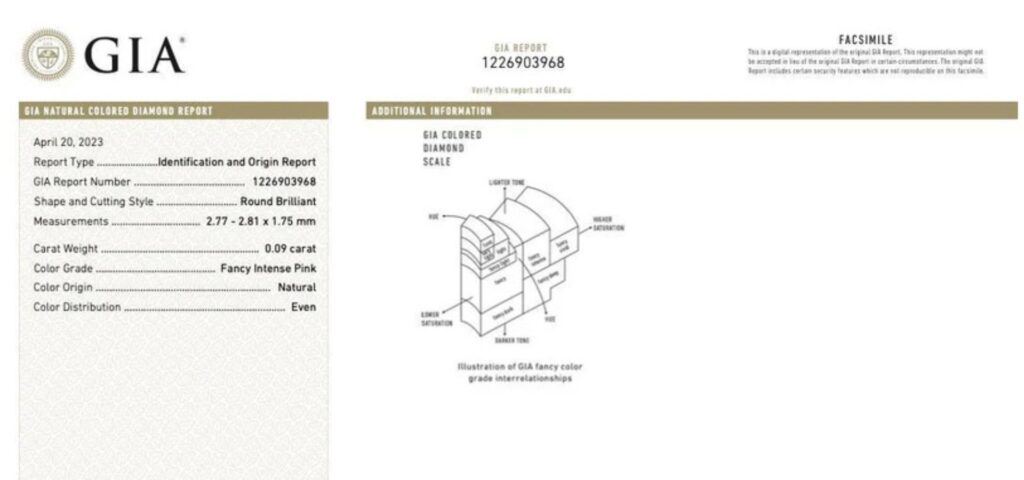
Always buy a certified pink diamond. For natural stones, GIA and Argyle certificates are the most respected. An Argyle certificate in particular – which assigned its own internal grading scale and added a serial number etched into the stone – carries significant weight among collectors and adds demonstrable provenance value.
For lab-grown pink diamonds, IGI and GIA both certify lab-grown stones and specify the growth method and any post-growth treatments. This transparency matters. A lab-grown pink diamond sold without disclosure of treatment is a stone you should not buy, regardless of the price.
At Terra Company HK, every pink diamond we present comes with certification from a recognised laboratory, and we walk through the certificate with you before any purchase is made.
Pink Diamond Jewellery: Settings and Metals
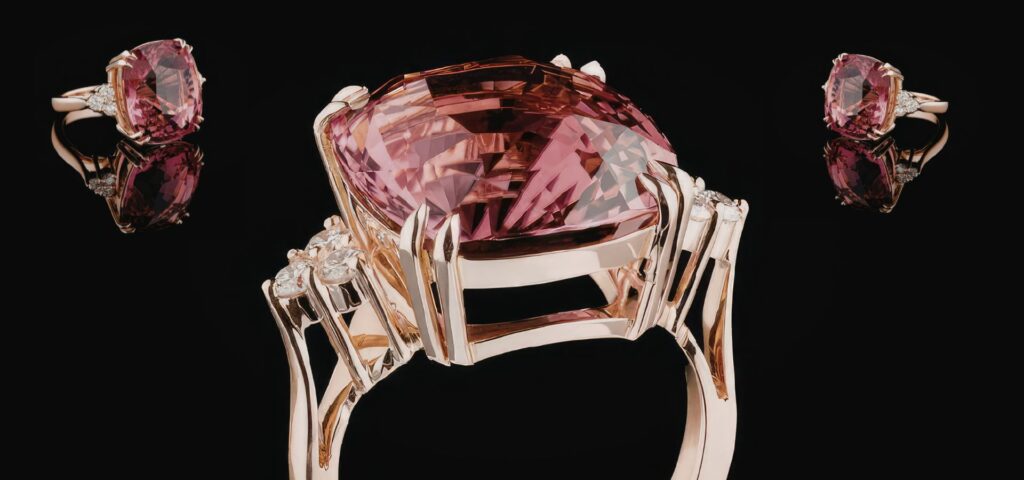
The setting and metal you choose have a real effect on how the pink reads in finished jewellery.
Rose Gold
The most natural pairing. Rose gold amplifies warm pink tones and creates a cohesive, harmonious look. It works beautifully for engagement rings, pendants, and earrings. If your pink diamond has any orange or peach in its secondary hue, rose gold is almost always the right call.
Yellow Gold
A bolder, more maximalist pairing. Yellow gold warms up cooler pinks and suits vintage-style settings particularly well. For a fancy vivid pink in a halo or milgrain setting, yellow gold can look spectacular.
White Gold and Platinum
Cooler metals let the pink stand on its own without any warmth from the metal. This works best for pure, cool pinks with no secondary hue, and in contemporary settings where the contrast is intentional. White settings also show off colour grading differences more clearly, which can be an advantage when the stone is the main event.
Who Buys Pink Diamond Jewellery?
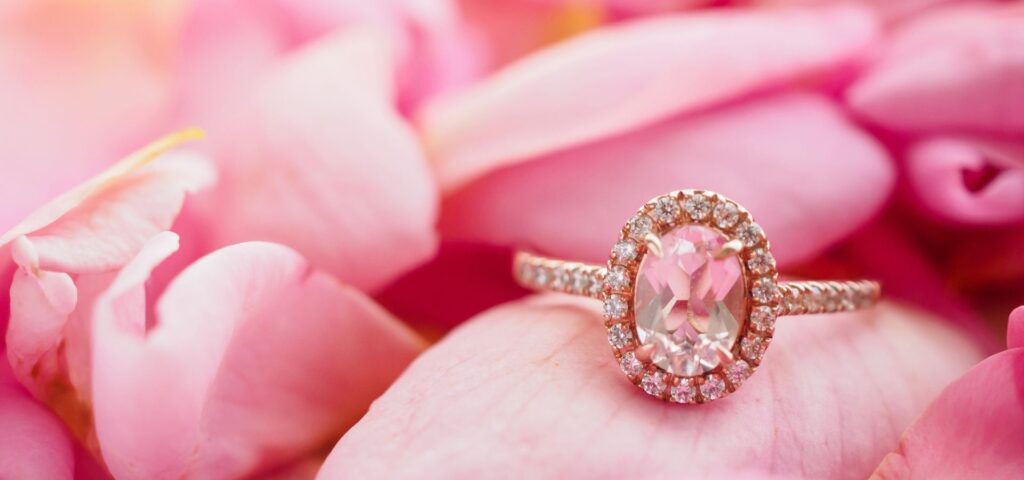
Pink diamonds attract a wide range of buyers, and the reasons vary more than you might expect.
Engagement rings. A pink diamond engagement ring is increasingly popular among buyers who want something meaningful and visually distinct from the standard solitaire. Lab-grown pink diamonds make this achievable at reasonable price points.
Anniversary and milestone gifts. A significant birthday, a decade of marriage, a personal achievement – pink diamonds are often chosen to mark moments that feel worth commemorating with something lasting.
Investment purchases. Natural pink diamonds, particularly GIA-certified fancy vivid stones with Argyle provenance, have consistently held and grown in value. Serious collectors treat them like any other finite, appreciating asset class.
Self-purchase. A growing segment of the pink diamond market is buyers purchasing for themselves. There is no particular occasion required. The combination of rarity, visual impact, and personal resonance is reason enough.
Caring for Pink Diamond Jewellery
Pink diamonds are diamonds. They share the same hardness and durability as any other diamond, which means everyday wear is fine with basic care.
- Clean regularly with warm water and a soft brush. Pink diamonds in white gold or platinum settings can be cleaned with mild soap. Ultrasonic cleaners are generally safe but check with your jeweller first, particularly if the stone is in a delicate setting.
- Remove pink diamond rings for heavy manual work, sports, or tasks where impact is likely.
- Store separately from other jewellery to avoid scratching softer stones.
- Have the setting inspected annually by a jeweller to check for loose prongs or wear.
Pink Diamonds at Terra Company HK
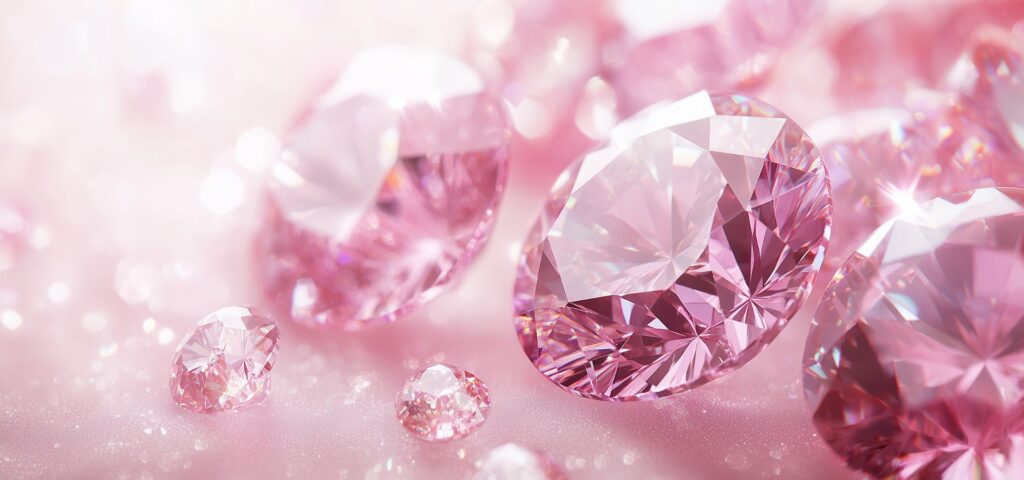
At Terra Company HK, we work with both natural and lab-grown pink diamonds across the full range of colour grades, shapes, and settings. We source natural stones with documented provenance and full certification, and we are straightforward about what each stone offers and what it costs.
If you are new to pink diamonds, we can walk you through everything – colour grading, cut choices, setting options, and how to get the best result for your budget. If you already know what you want, we can source it.
Get in touch to arrange a private consultation.
Terra Company HK – Pink diamonds, natural and lab-grown, presented with full transparency.