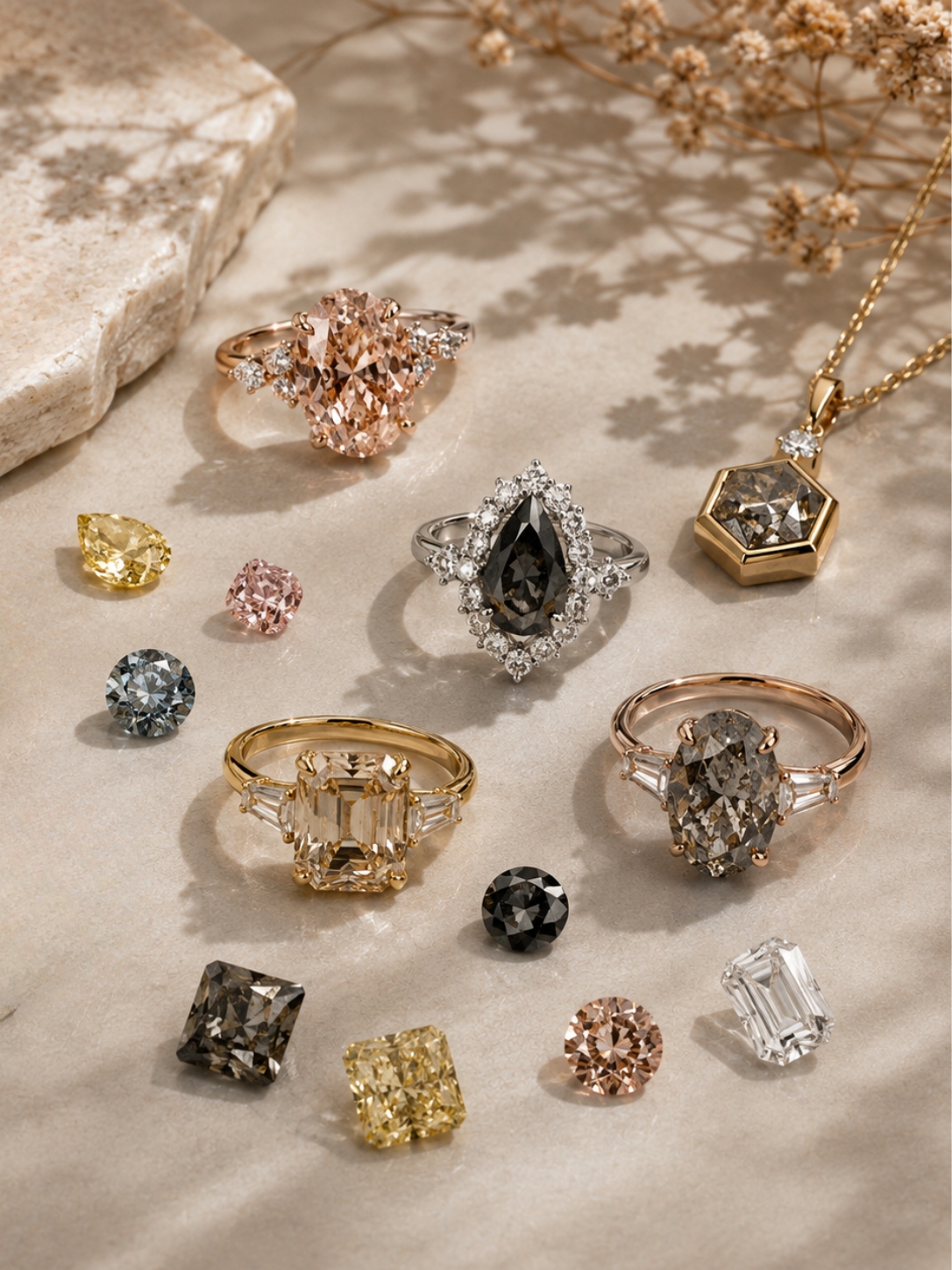

From loose stone to custom ring: how our setting service works, how long each stage takes, and what you approve before we move on.
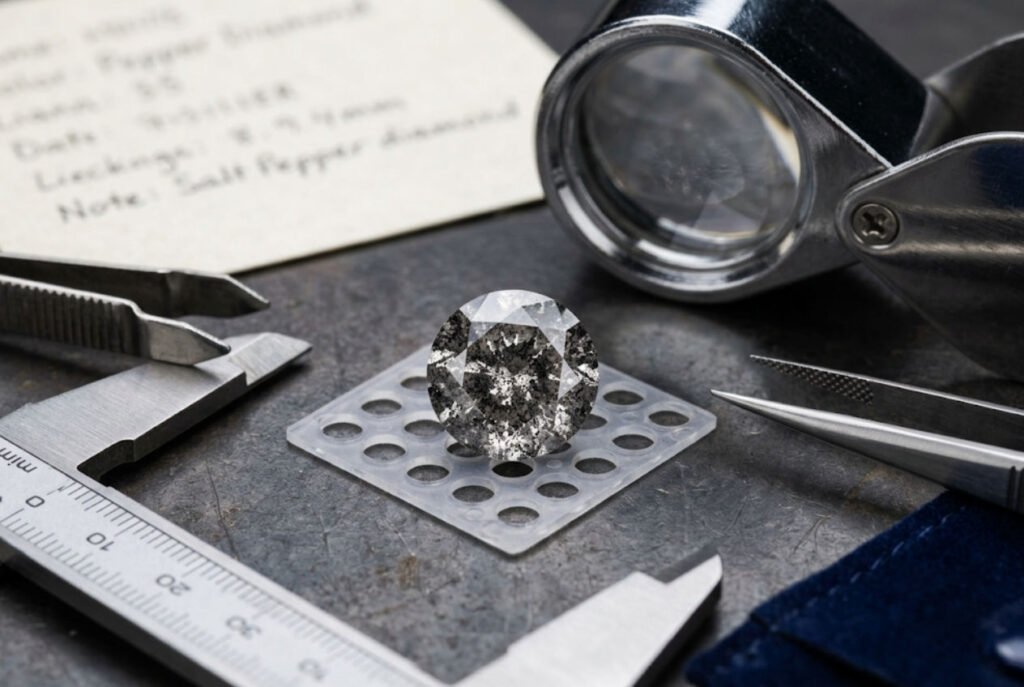
The short answer: a custom setting loose diamond project with us takes about three to four weeks across six stages: consultation, design, quote and model, casting, stone setting, and final inspection. You approve something concrete at every stage, so nothing is cast, set or polished without your written yes.
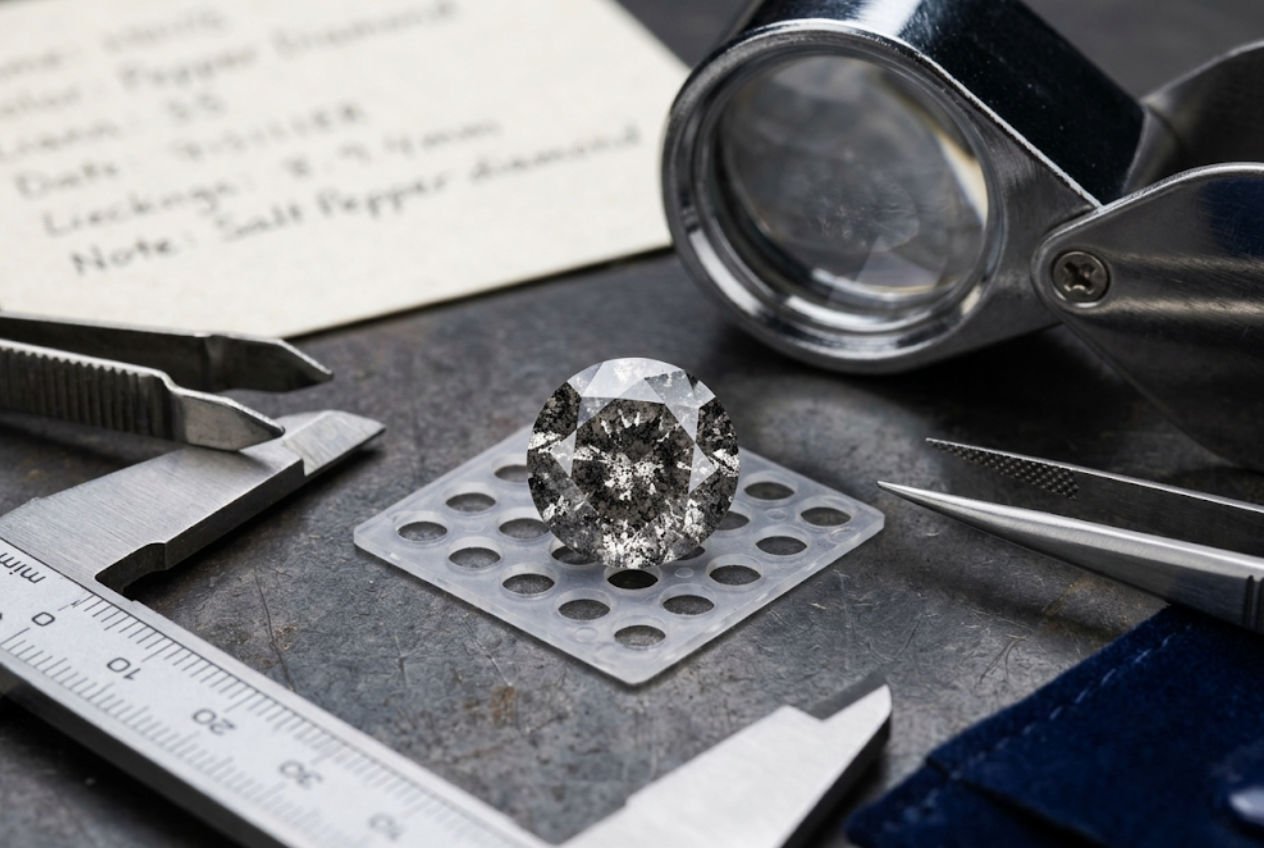
You bought the stone first. Maybe it is a speckled grey and black round that looked like a night sky under the loupe, and now it sits in a pouch while you work out what to do next. A custom setting loose diamond order solves that, but only if you know what happens between handing over the stone and wearing the ring.
This guide walks through our ring setting service in plain language: what each stage involves, how long it takes, and exactly what you sign off before we continue.
Table of Contents
What a custom setting loose diamond service includes
Setting a loose diamond means designing a mount around a stone you already own, then fixing the stone in it so it stays secure through daily wear. Unlike buying a ready-made ring, the metal is built to your stone’s exact dimensions, shape and character. For loose salt and pepper diamonds, where no two stones look alike, that matters even more.
A good custom ring manufacturer handles the whole chain in one place: design, CAD, casting, stone setting and finishing. When every stage sits under one roof, nobody has to guess at measurements passed between workshops, and you deal with one person from start to finish.
What to bring to your first consultation
- Your loose diamond, or clear photos and millimetre measurements if it is still with the seller.
- Any certificate or report, even one that only lists weight and dimensions.
- Your ring size, or the finger you plan to wear it on.
- A rough budget range for metal and labour.
- Two or three photos of rings you love, and one or two you definitely do not.
Our custom setting loose diamond process, step by step
Here are the six stages, with typical timings and the decision that stays with you at each one.
Consultation and stone assessment
Typical timing: days 1 to 3
We examine your stone, or your photos, under magnification and record its weight, dimensions, shape and inclusion positions. We also look for surface-reaching fractures and thin edges, because those decide where metal can safely touch the stone. Then we talk through styles, metals and how you will wear the ring.
You approveThe stone details we recorded, your preferred setting direction and metal, and a target budget.
Design and CAD render
Typical timing: days 4 to 8
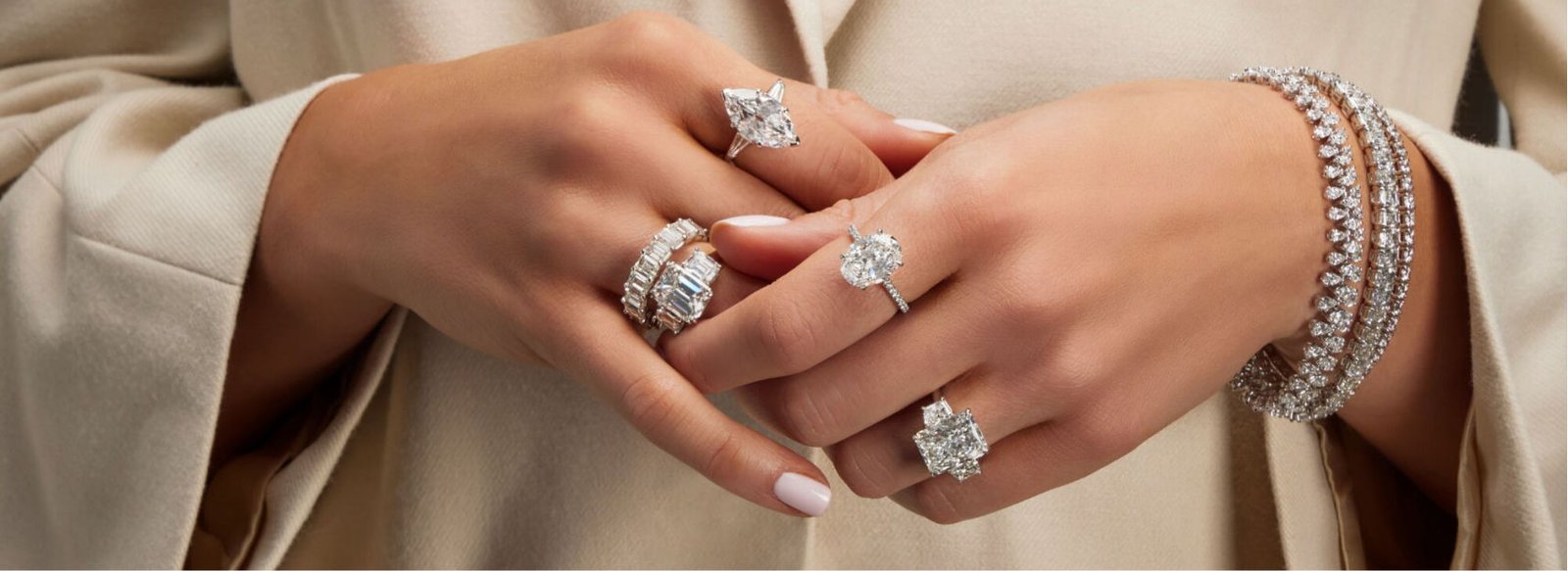
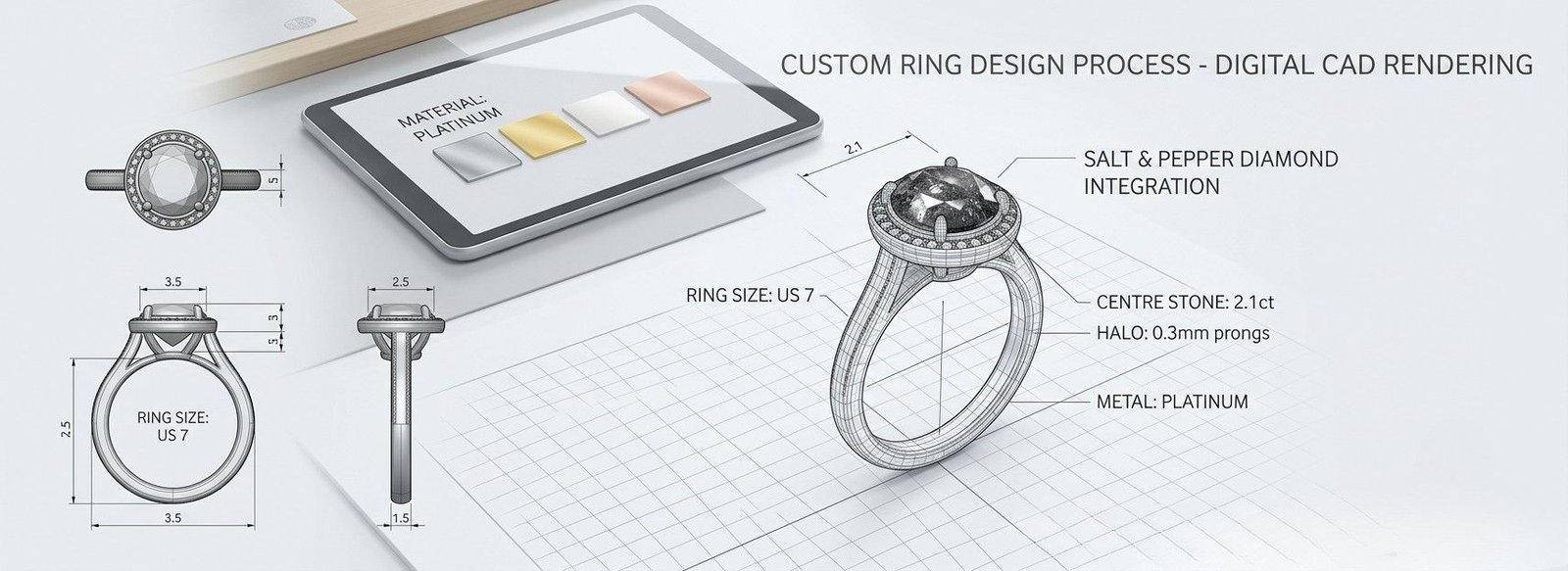
Our designer sketches your ring and builds a 3D CAD model sized to your stone. You receive renders from the top, side and three-quarter angles, plus band width, setting height and seat depth in millimetres. Changes are easiest here, because nothing physical exists yet.
You approveThe CAD renders and every measurement. Nothing moves forward without your written confirmation.
Written quote and test-fit model
Typical timing: days 9 to 11
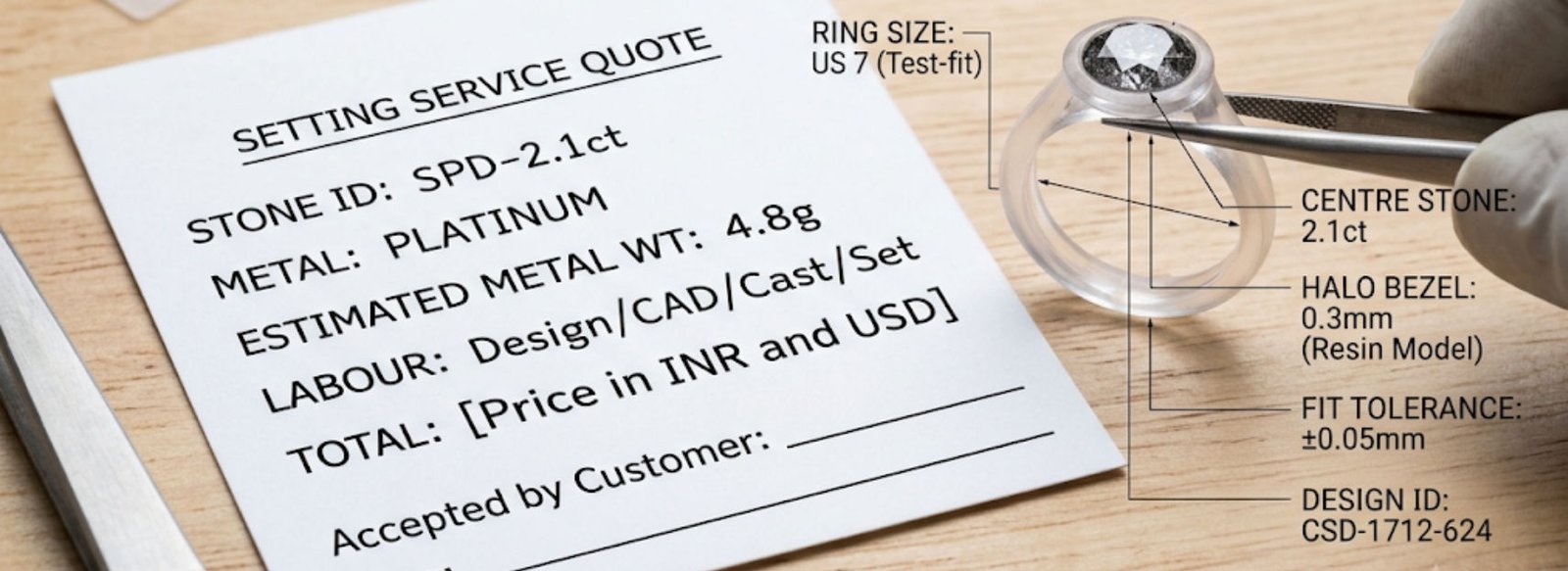
With the design locked, we send a written quote covering metal weight, labour and any extras. Once you accept it, we print a resin or wax model of the ring and test the stone against the model’s seat. This catches any mismatch before a single gram of gold is poured.
You approveThe written quote, plus the model’s fit and ring size, from photos or by trying it on in person.
Casting and finishing the mount
Typical timing: days 12 to 16
The model is cast in your chosen metal: 14k or 18k yellow, white or rose gold, or platinum. We clean up the raw casting, shape the prongs or bezel, and polish the mount without the stone in it. Keeping the diamond out until now protects it from heat, filing and polishing compounds.
You approvePhotos of the finished, empty mount, so you can confirm metal colour and proportions.

Setting the stone
Typical timing: days 17 to 19
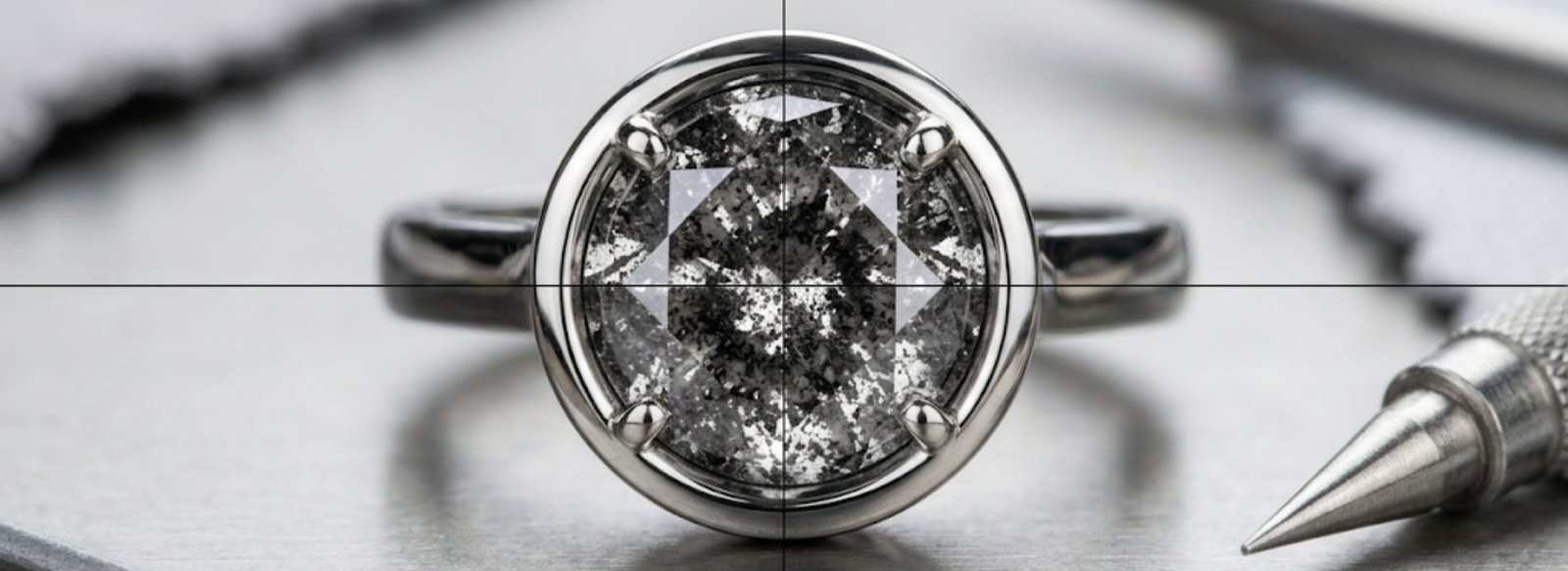
This is the step that gives the service its name. A bench jeweller seats the stone, checks that it sits level, and tightens the prongs or burnishes the bezel under a microscope. For a salt and pepper stone, we turn it so its most striking pattern faces up, and we place metal over weaker areas where we can. Setting a loose diamond is slow, careful work, and we never rush it.
You approveClose-up photos or a short video of the stone in place, including which way the pattern faces.
Final inspection and handover
Typical timing: days 20 to 25
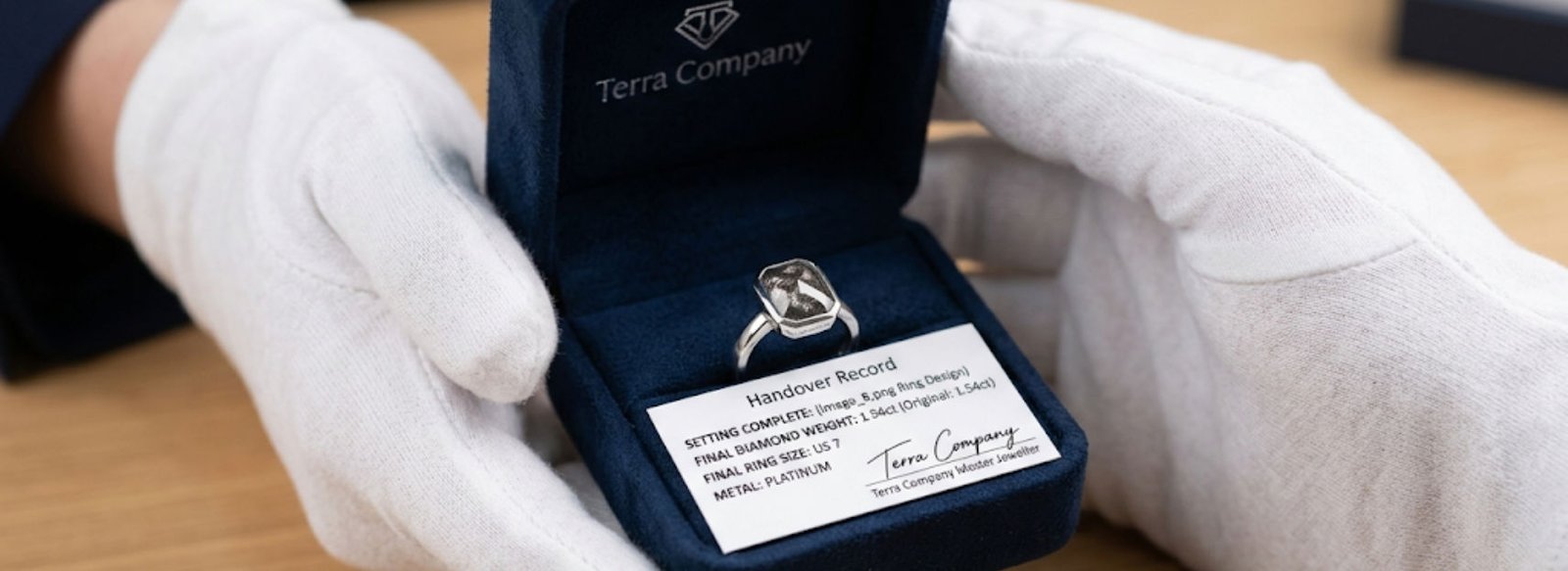
We check every prong or bezel edge, test the stone for movement, then polish and clean the ring. You receive final photos, a care sheet, and a record of the stone’s weight and dimensions before and after setting. Once you approve, we pack the ring for pickup or insured delivery.
You approveThe final photos and the finished ring, before we hand it over or ship it.
Your setting timeline at a glance
| Stage | Typical timing | You approve |
|---|---|---|
| 1. Consultation | Days 1 to 3 | Stone record, style, metal, budget |
| 2. Design and CAD | Days 4 to 8 | Renders and measurements |
| 3. Quote and model | Days 9 to 11 | Written quote, fit and size |
| 4. Casting | Days 12 to 16 | Empty mount photos |
| 5. Stone setting | Days 17 to 19 | Close-ups, pattern direction |
| 6. Final inspection | Days 20 to 25 | Finished ring |
Timings are working days. We confirm your exact schedule when you approve the CAD render.
Why salt and pepper stones need a considered setting
Salt and pepper diamonds get their look from dense inclusions such as carbon, graphite and tiny crystals, which create a speckled, galaxy-like pattern. They are real diamonds, with a hardness of 10 on the Mohs scale, but heavy inclusions can create weak spots. Because these stones are rarely graded like white diamonds, we judge each one by eye and under magnification instead of leaning on a letter grade.
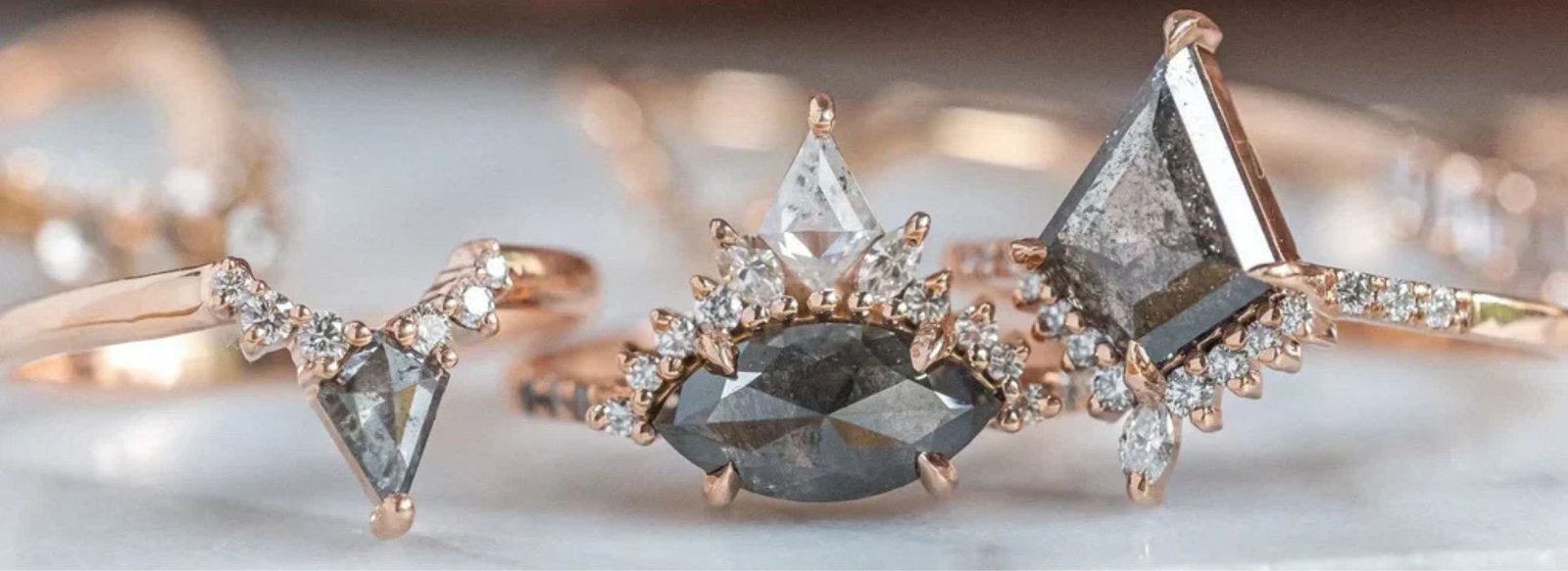
That is why every custom setting loose diamond job starts with a real assessment, not a template. A stone with a clean, closed surface suits a classic prong. A stone with a feathery inclusion near the edge may need a bezel or a low prong. Your approval of the setting style in step one rests on what we actually see in your stone, not on a sales preference.
Settings that suit loose salt and pepper diamonds
Four styles that work well for speckled stones. Each one can be adapted to your stone’s shape, size and inclusion pattern.
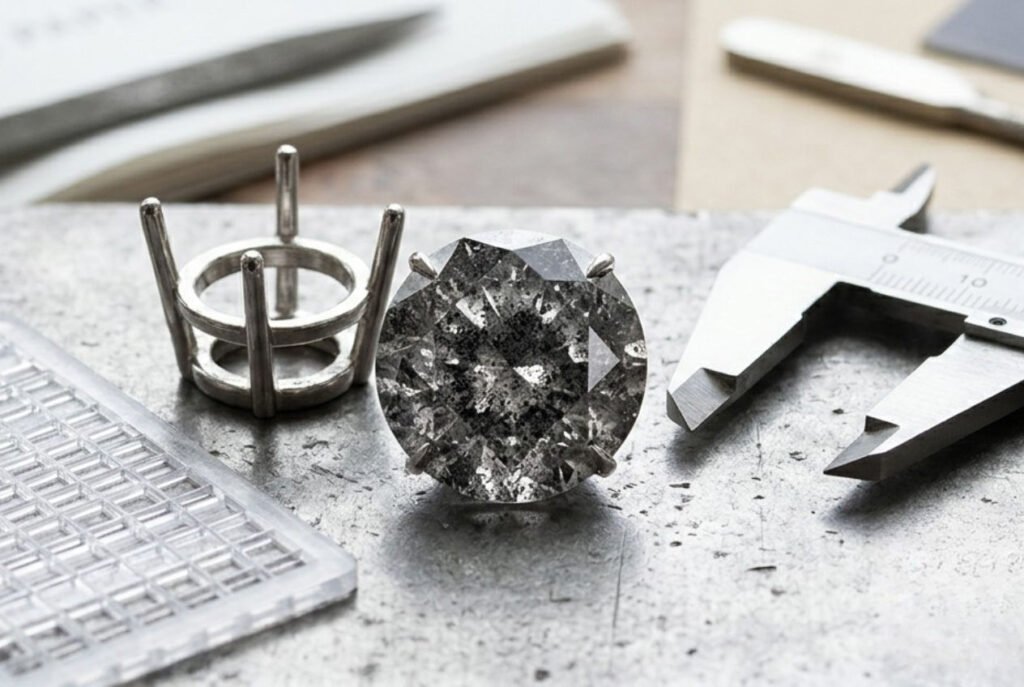
Prong solitaire
Lets light and pattern show from every side.
Best for: clean-edged stones
Metals: yellow, white or rose gold, platinum
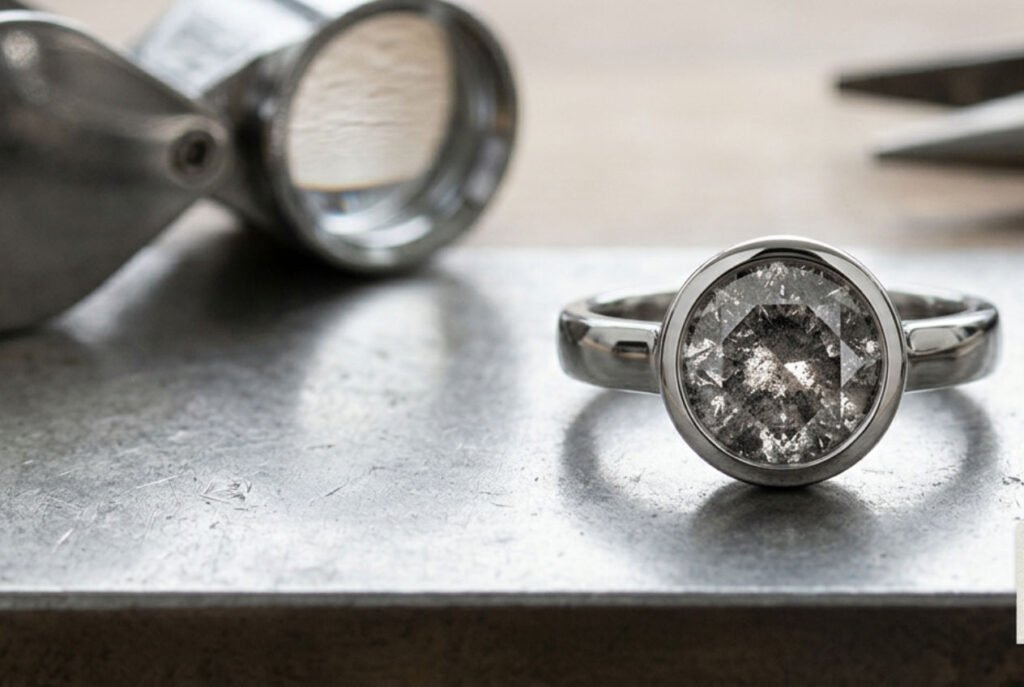
Full bezel
A metal rim wraps the stone and shields its edges.
Best for: edge inclusions, active hands
Metals: yellow, white or rose gold, platinum
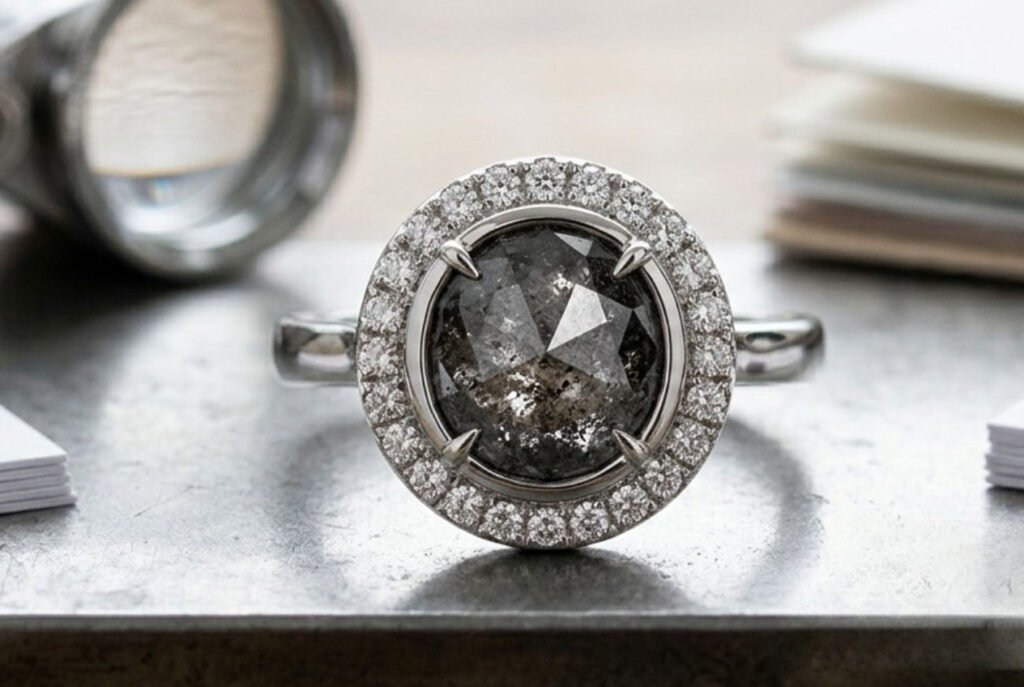
Halo
Small white diamonds frame the dark speckles and add presence.
Best for: smaller centre stones
Metals: white or rose gold, platinum
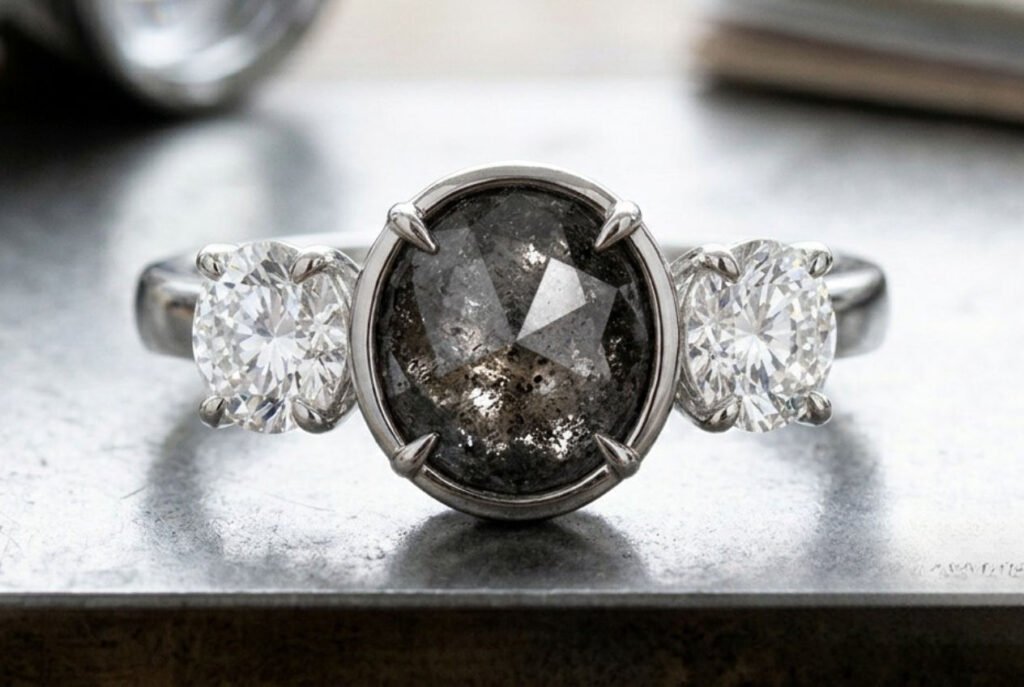
Three-stone
Side stones balance an oval or elongated centre.
Best for: oval and pear shapes
Metals: yellow or rose gold, platinum
Choosing a custom ring manufacturer: five checks
Before you commit to any workshop, ask these questions:
- Will they measure and examine your stone before quoting?
- Do you get CAD renders and a written quote before any metal is cast?
- Is the stone kept out of the casting and polishing stages?
- Can you see progress photos at the setting stage?
- Is there a record of the stone’s weight before and after setting?
If a custom ring manufacturer cannot say yes to all five, keep looking.
Frequently asked questions
How long does a custom setting loose diamond order take?
Most orders take three to four weeks from first consultation to handover. Designs with extra stones, such as halos, can take longer, and we confirm the exact timeline when you approve the CAD render.
Can you set a diamond I bought somewhere else?
Yes. We examine the stone first and tell you honestly if it is too fragile for a particular style. If it is, we suggest a safer setting such as a bezel.
How do you protect my stone during setting?
We weigh, measure and photograph the stone when we receive it, and we keep it out of the casting and polishing stages. Any risk we spot is explained in writing before work begins.
Which metal looks best with salt and pepper diamonds?
It is a matter of taste. Yellow and rose gold warm the dark speckles, while white gold and platinum give a cooler, higher-contrast look. All of them hold a stone securely when the setting is built well.
Can I change the design after approving the CAD render?
Small changes are possible until the ring is cast. After casting, any change means making a new mount, so we ask you to check the render and model carefully.
Start your custom setting loose diamond project
Bring the stone or send clear photos to our ring setting service. We will reply with a design direction, a realistic timeline and the first decision for you to make.