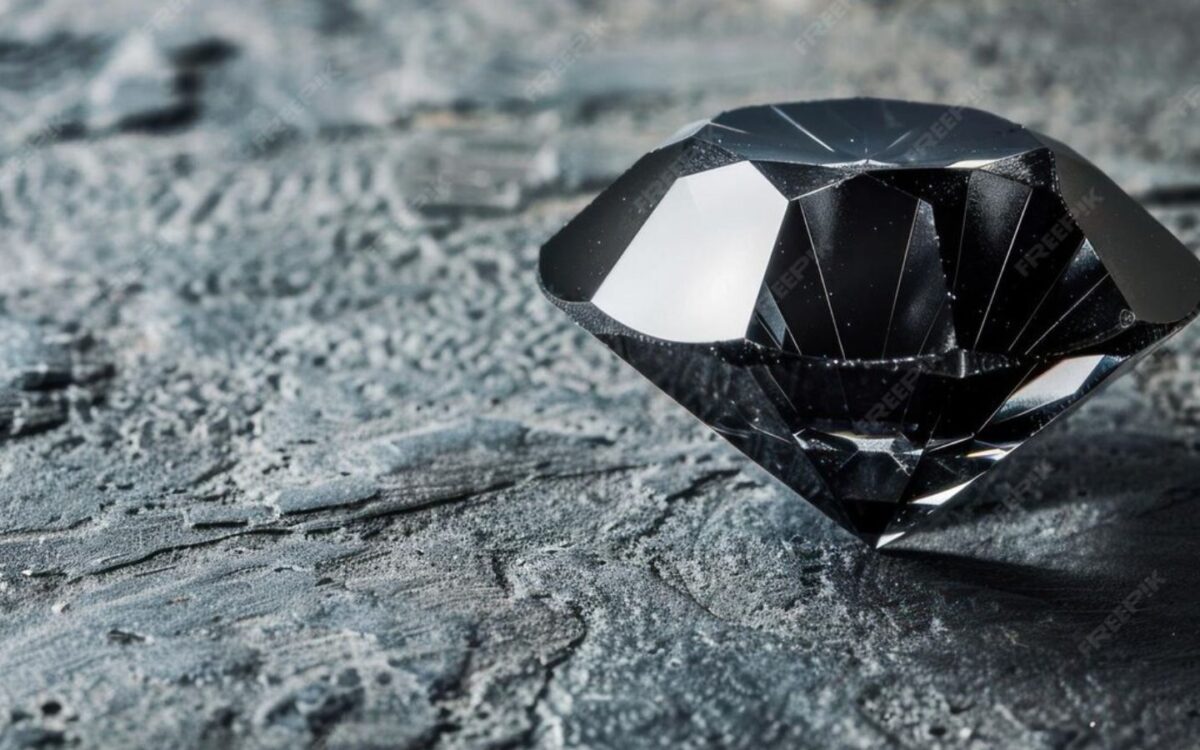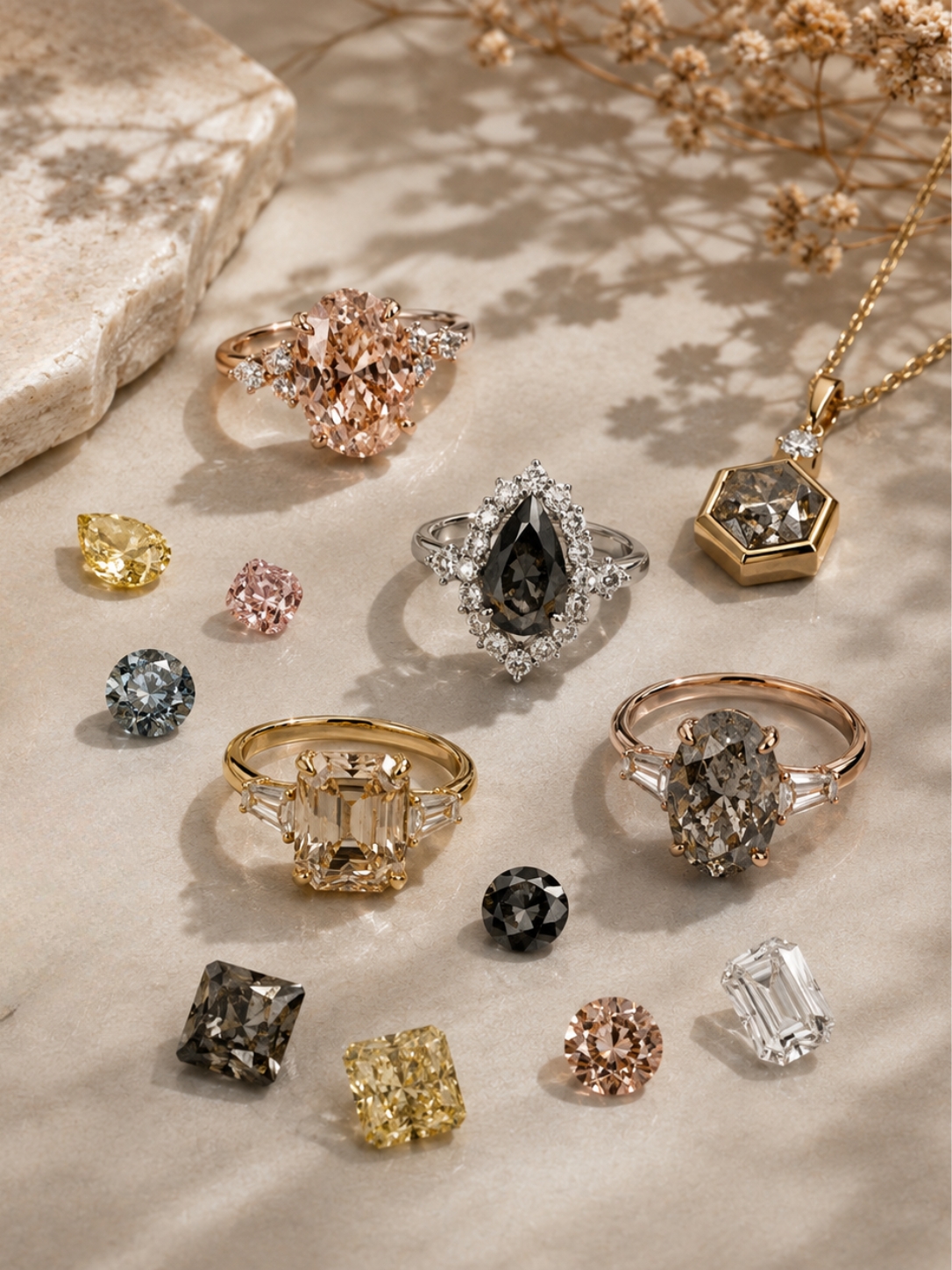


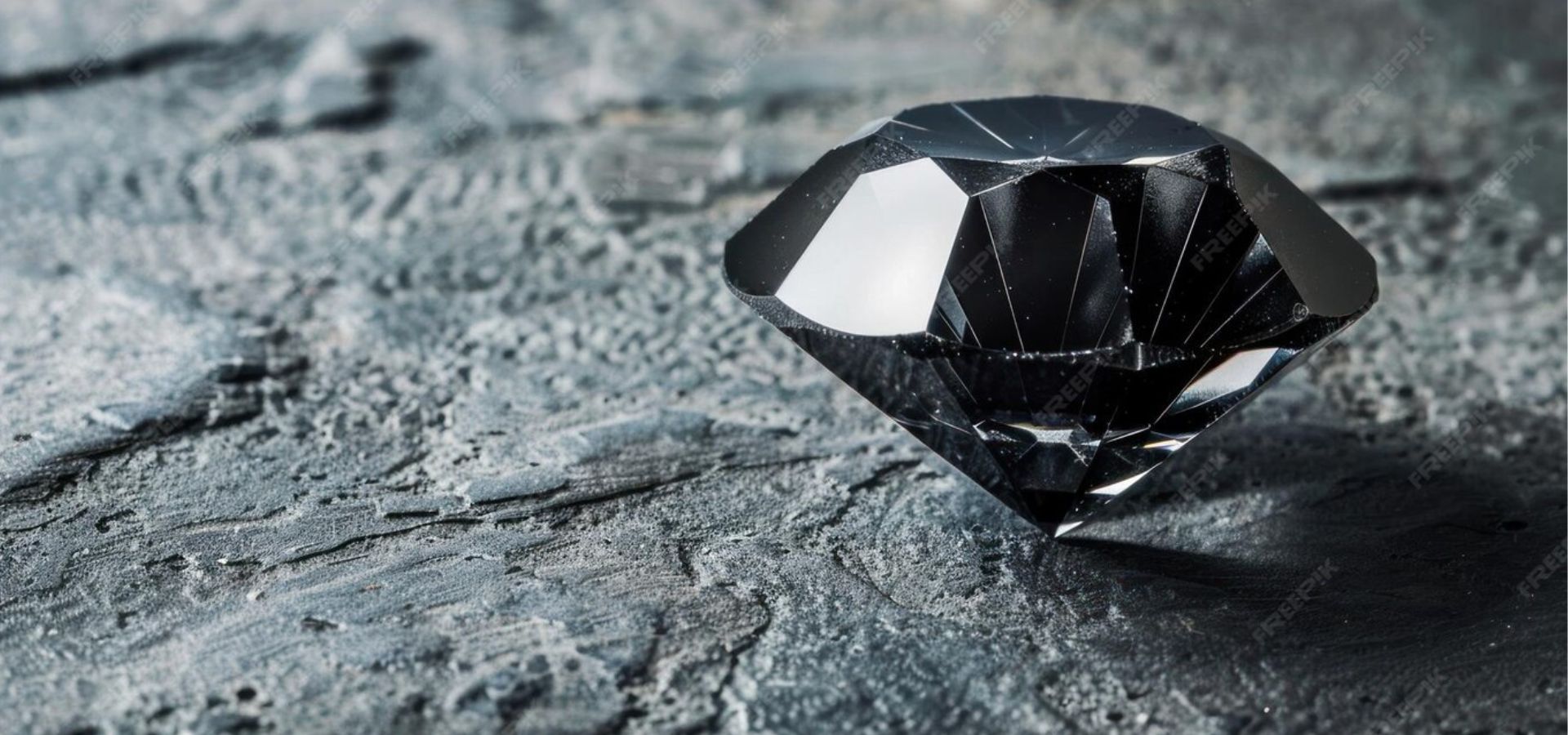
Black diamonds carry a meaning that most gemstones do not. Associated with strength, resilience, and transformation across cultures going back centuries, they have moved firmly into the mainstream – as engagement ring centre stones, anniversary gifts, and personal milestone pieces.
What black diamonds actually are, what they symbolise, how they are graded, and what to consider before you buy one.
What Is a Black Diamond?
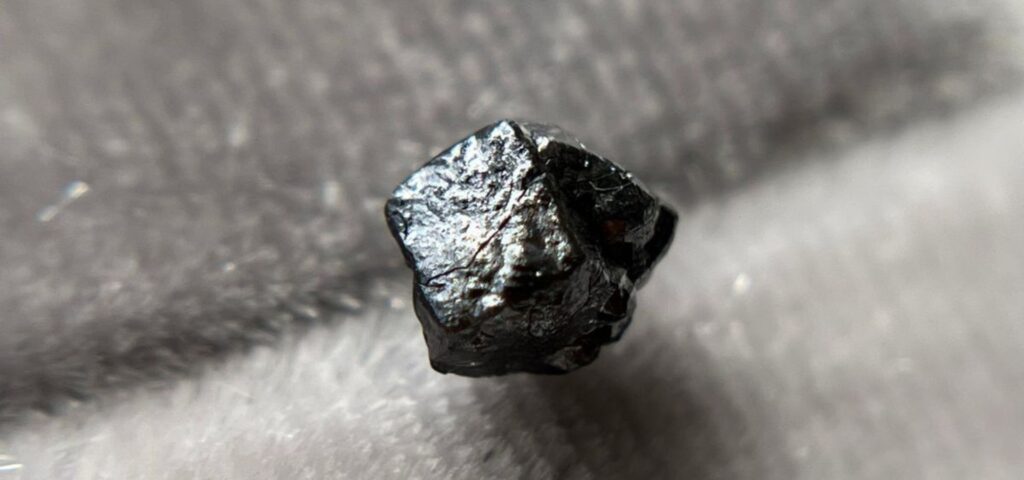
A black diamond is a real diamond. It shares the same chemical composition as a white or colourless diamond – pure carbon in a cubic crystal structure – and scores 10 on the Mohs hardness scale. The difference is purely visual, and it comes down to what is happening inside the stone.
There are two types of black diamond worth knowing about.
Natural black diamonds get their colour from a high density of graphite inclusions, along with dark mineral crystals and internal fractures distributed throughout the stone. These inclusions are so dense and widespread that they absorb almost all incoming light rather than reflecting it back, giving the stone its deep, opaque appearance. Natural black diamonds, particularly those known as carbonado found in Brazil and the Central African Republic, are scientifically unusual – some researchers believe they may have formed through a meteorite impact rather than in the earth’s mantle like most diamonds.
Treated black diamonds are white diamonds that have been subjected to heat treatment or irradiation to darken their colour. This is a widely accepted and disclosed process in the trade. Treated black diamonds are far more common and more affordable than natural black diamonds, and when treated correctly they are perfectly durable for everyday wear.
The distinction matters when you are buying. A reputable seller will always tell you which type you are getting, and any certification should specify whether the colour is natural or the result of treatment.
The Cultural History of Black Diamonds
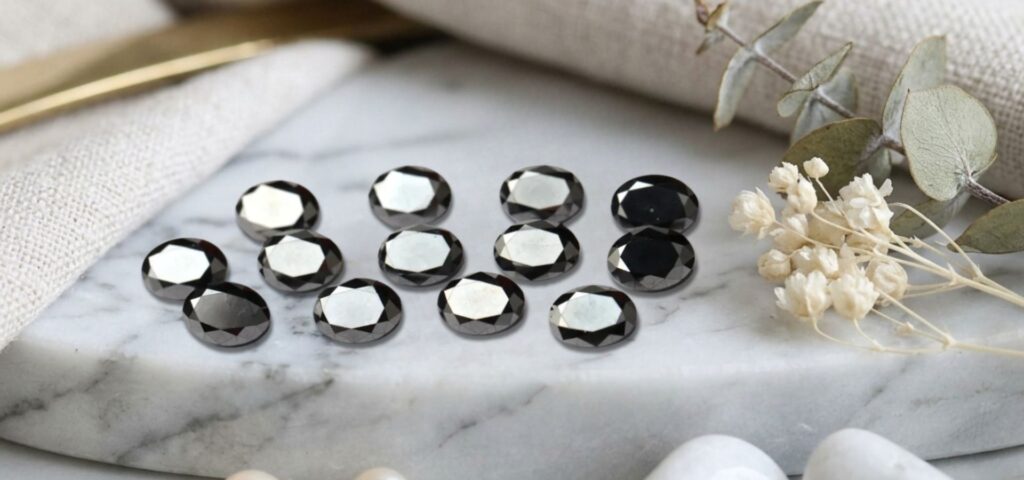
Black diamonds have appeared in significant cultural contexts across multiple civilisations, and the associations they carry did not emerge from nowhere.
India: The Vajra
In ancient Indian culture, black diamonds were called “vajra,” a Sanskrit word meaning thunderbolt. The belief was that these stones were formed when lightning struck the earth, which gave them a divine and protective quality. Priests kept vajra stones in temples and used them in ceremonies intended to protect communities from illness, drought, and misfortune. The connection between a black diamond and protective power runs deep in this tradition.
Italy and the Middle East: Power and Permanence
Italian nobles in the 15th century began incorporating black diamonds into crowns and royal jewellery. The reasoning was deliberate – a black stone that absorbed light rather than scattering it conveyed a different kind of authority than sparkling colourless gems. It communicated permanence and solidity. Middle Eastern rulers adopted the same thinking, commissioning pieces where the black diamond was specifically intended to project strength that could not be questioned.
Protective Traditions
Across multiple cultures and traditions, black stones have been associated with protection from negative energy. Whether or not one subscribes to that belief, it explains why black diamonds have historically appeared in amulets, protective jewellery, and ceremonial objects rather than purely decorative pieces. The stone carried weight beyond its appearance.
What Does a Black Diamond Symbolise?
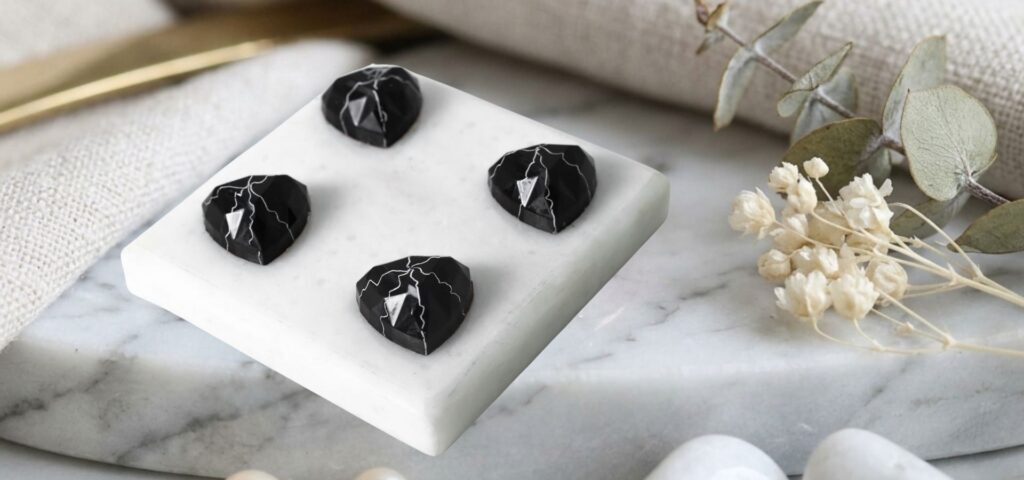
The symbolism of black diamonds is consistent enough across different contexts that it is worth taking seriously, even if you are buying purely for the look.
Strength and Resilience
This is the most common association, and it makes intuitive sense. A diamond rated 10 on the Mohs scale is already the hardest naturally occurring material. A black one reads differently from a sparkling white stone – less about light and perfection, more about solidity and endurance. Many people who choose black diamond jewellery do so specifically after a period of difficulty: recovery from illness, coming through a major life change, or achieving something that required real persistence. The stone becomes a marker of what they came through.
Individuality
A black diamond engagement ring does not look like a traditional engagement ring, and that is entirely the point for many buyers. Choosing one signals that the wearer is not particularly interested in convention for its own sake. It is a preference for meaning and distinctiveness over doing what everyone else does.
Commitment That Acknowledges Reality
In the context of an engagement ring, a black diamond carries a different kind of romantic symbolism than a white diamond. White diamonds have historically been associated with purity and perfection. A black diamond is more honest – it suggests a commitment that has thought about the full picture, including the complicated parts, and is choosing to commit anyway. For couples who prefer that framing, it resonates.
Transformation
Because diamonds form under extreme pressure and heat, they have long been used as symbols of transformation – something ordinary becoming something extraordinary through difficulty. Black diamonds intensify this reading. They are often chosen to mark transitions, not just achievements. A divorce survived, a career rebuilt from scratch, a health crisis overcome. The stone is a way of saying: this changed me, and I am marking it.
Mystery
A black diamond does not reveal its structure the way a transparent stone does. You cannot see into it. That opacity creates a visual presence that is attention-holding without being flashy. It draws people in precisely because it does not give everything away immediately.
Natural vs Treated Black Diamonds: Key Differences
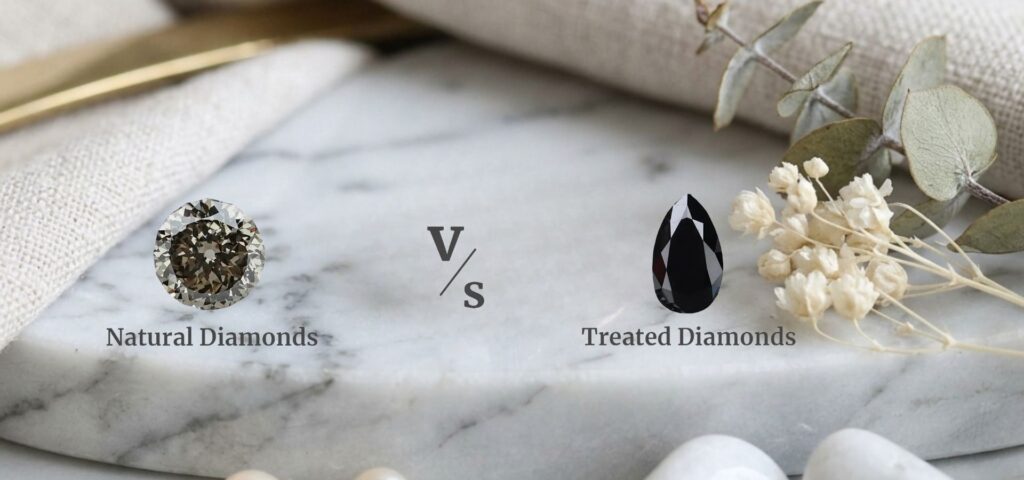
This is a decision most black diamond buyers face, and it is worth understanding clearly before you shop.
| Natural Black Diamond | Treated Black Diamond | |
| Colour origin | Dense graphite inclusions | Heat or irradiation treatment |
| Rarity | Relatively rare | Common |
| Price | Higher | More affordable |
| Certification | GIA or similar | Should disclose treatment |
| Durability | Excellent | Excellent when properly treated |
For most jewellery purposes, treated black diamonds are entirely appropriate. They look identical to natural black diamonds and wear just as well. The price difference is significant, which allows for a larger stone or a more complex setting within the same budget.
If you are buying for investment reasons or want to own something with genuine geological rarity, a natural black diamond is the right choice. Just make sure certification accompanies the stone and clearly states the colour is natural.
At Terra Company HK, we are upfront about which type we are presenting and why. You will always know exactly what you are getting.
Black Diamond Colour Grading: How It Works
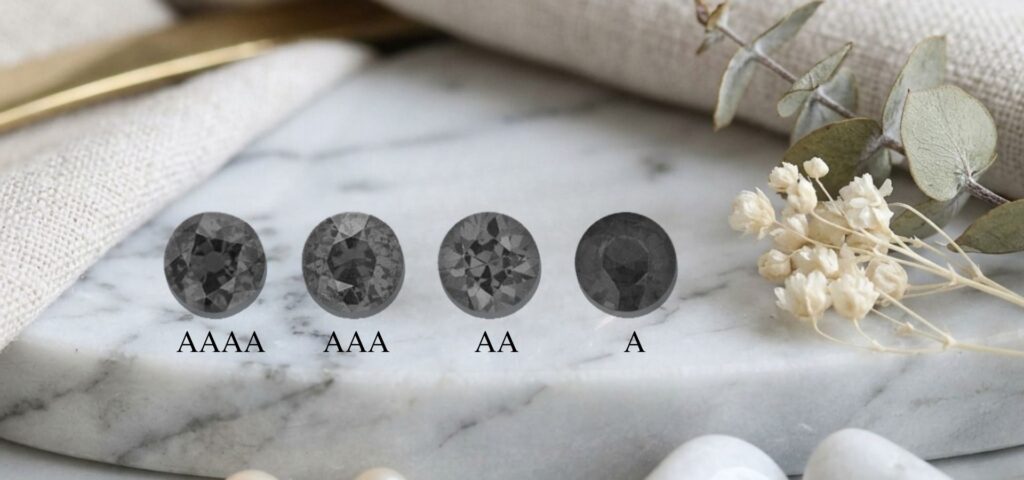
Traditional GIA colour grading for diamonds runs from D (colourless) to Z (light yellow or brown). Black diamonds fall entirely outside this scale, because colour grading designed for transparency cannot be meaningfully applied to an opaque stone.
For black diamonds, the relevant quality factors are:
Evenness of colour. A high-quality black diamond should have consistent, even black throughout. Patches of grey, brown, or uneven areas where the colour thins out are considered undesirable.
Surface quality. Because black diamonds are opaque, the surface is everything. Scratches, pits, or poor polish are visible in a way that interior inclusions in a transparent stone are not.
Cut quality. Cut affects how light interacts with the surface. A well-cut black diamond has a deep, rich surface appearance. A poorly cut one can look flat or dull. This is where choosing a skilled cutter makes a real difference.
Carat weight. Black diamonds are slightly denser than colourless diamonds, so a black diamond of a given carat weight may appear slightly smaller than an equivalent colourless stone. It is worth asking to see stones side by side if size matters to you.
Black Diamond Cuts and Shapes: What Works Best
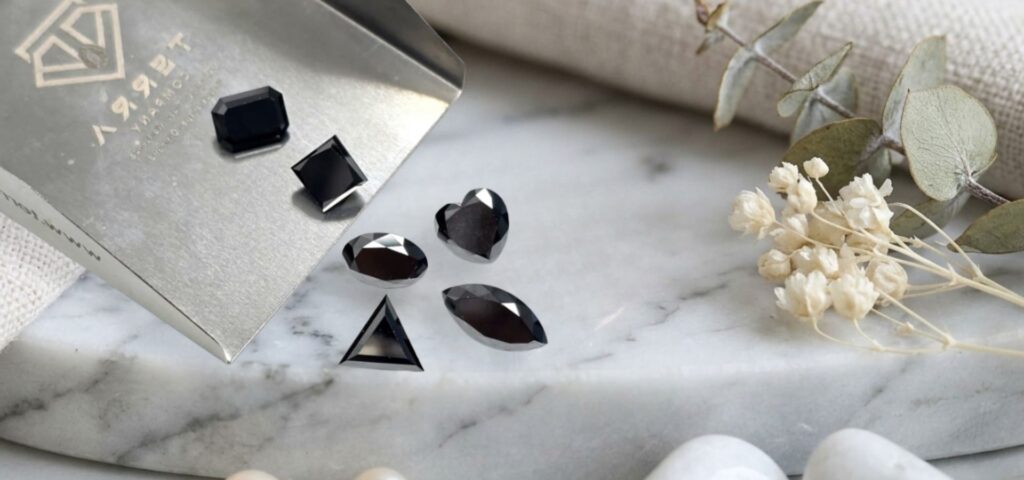
Unlike colourless diamonds where the brilliant round cut dominates, black diamonds suit a wider range of cuts because brilliance is not the primary goal.
Round Brilliant
Still popular for black diamonds, particularly in engagement ring solitaires. The round shape is universally flattering and pairs well with almost any band style. In a black diamond, the brilliant facets create a subtle shimmer on the surface rather than the sharp sparkle you get from a colourless stone.
Cushion
The cushion cut gives a softer, more vintage feel. It works particularly well for black diamonds in halo settings, where smaller accent stones surround the centre stone. The contrast between the deep black centre and bright white accent diamonds is very effective.
Princess and Asscher
Both square cuts that suit black diamonds well. The princess cut has sharp corners and a modern feel. The Asscher cut is step-faceted and has a more geometric, architectural quality. Both read as confident and deliberate.
Rose Cut
Increasingly popular for black diamonds because the flat base and domed top maximise the visible surface area of the stone, making it appear larger than its carat weight suggests. The rose cut also produces an interesting play of light across a black surface, creating soft reflections rather than hard sparkle.
Pear and Marquise
Elongated shapes that work well as pendants and in drop earrings. In rings, they create a distinctive silhouette. Marquise cuts in particular suit black diamonds because the pointed ends emphasise the stone’s sharpness.
Black Diamond Engagement Rings: What to Know
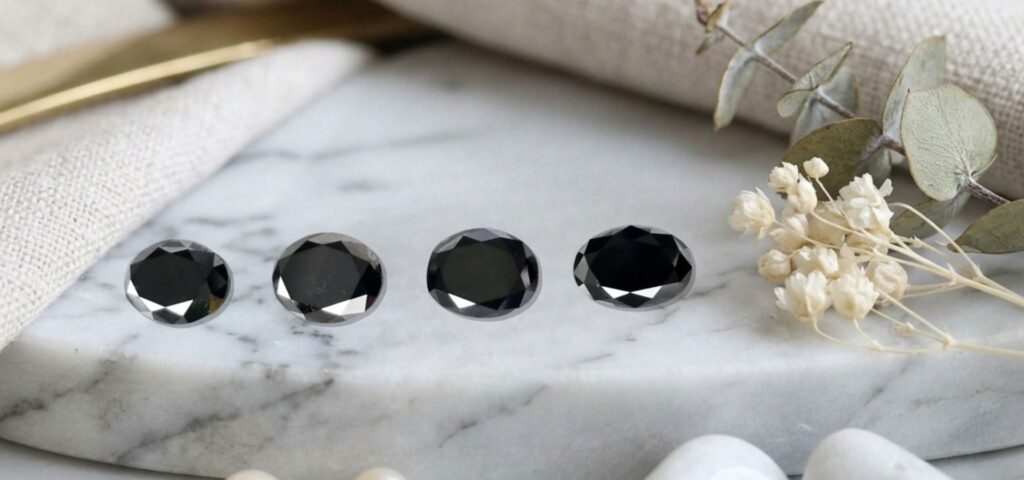
Black diamond engagement rings have moved well beyond niche status. They are a genuine mainstream option, and the range of styles available reflects that.
A few things worth considering specifically for engagement rings:
Setting choice matters for durability. Black diamonds can be more susceptible to surface chipping than colourless diamonds, partly because treated black diamonds may have internal stress from the treatment process, and partly because the opaque surface makes chips more visible. A bezel or rub-over setting that wraps metal around the edge of the stone offers significantly more protection than a claw or prong setting, particularly at the girdle.
Metal contrast is part of the design. White gold and platinum create the sharpest visual contrast with a black diamond. Yellow gold creates a warmer, more vintage feel. Rose gold sits in between. None is objectively better – it comes down to what the wearer prefers and what suits the rest of their jewellery.
Consider the long term. A black diamond engagement ring is going to be worn every day for decades. Make sure the stone is properly certified, the setting is appropriate for daily wear, and the jeweller you are buying from offers aftercare and inspection services.
Black Diamond Anniversary and Milestone Gifts
Black diamonds work well for milestone gifts precisely because they carry more weight than a standard gemstone purchase.
The 67th wedding anniversary is traditionally associated with black diamonds, though few couples make it that far. More commonly, black diamonds are chosen for 10th, 20th, and 25th anniversaries as a way of marking a significant number of years with something that acknowledges the reality of a long partnership – not just the romance of it, but the commitment, the work, and the endurance.
For personal milestones – finishing a degree after years of part-time study, a significant career achievement, coming through a serious illness – black diamond jewellery is often chosen because it feels more substantive than a standard gift. The symbolism does some of the work that words struggle to do.
How to Care for Black Diamond Jewellery
Black diamonds are durable, but they benefit from specific care habits.
Cleaning at home. Warm water with a small amount of mild dish soap and a soft toothbrush works well. Gently work around the stone and into the setting where oils and residue collect. Rinse thoroughly and dry with a lint-free cloth. Do this every few weeks if the piece is worn regularly.
What to avoid. Ultrasonic cleaners can be risky for treated black diamonds, as the vibration can worsen internal stress fractures created during the treatment process. Check with your jeweller before using one. Steam cleaners should also be avoided for the same reason. Harsh chemicals, bleach, chlorine, and acetone will damage both the stone and the setting.
Storage. Store black diamond pieces separately, either in a soft pouch or a dedicated compartment in a jewellery box. Black diamonds are hard enough to scratch other stones and metals, and other hard stones can chip black diamond surfaces.
Professional servicing. Take black diamond jewellery to a jeweller for a professional clean and inspection every six months. Prongs and settings can wear over time, and it is far better to catch a loose stone during an inspection than after it has been lost.
Daily habits. Remove black diamond rings before gardening, gym sessions, DIY work, or anything involving significant impact. A sharp blow against a hard surface at the wrong angle can chip a black diamond, particularly at the corners or girdle.
Black Diamonds at Terra Company HK
At Terra Company HK, we work with both natural and treated black diamonds and are straightforward about the difference. Every stone we present comes with appropriate certification, and we explain the details clearly so you can make a confident decision.
Whether you are looking for a black diamond engagement ring, an anniversary piece, or something to mark a personal milestone, we can help you find the right stone and the right setting for how it will actually be worn.
Get in touch to arrange a consultation.
Terra Company HK – Black diamonds, natural and treated, presented with complete transparency.