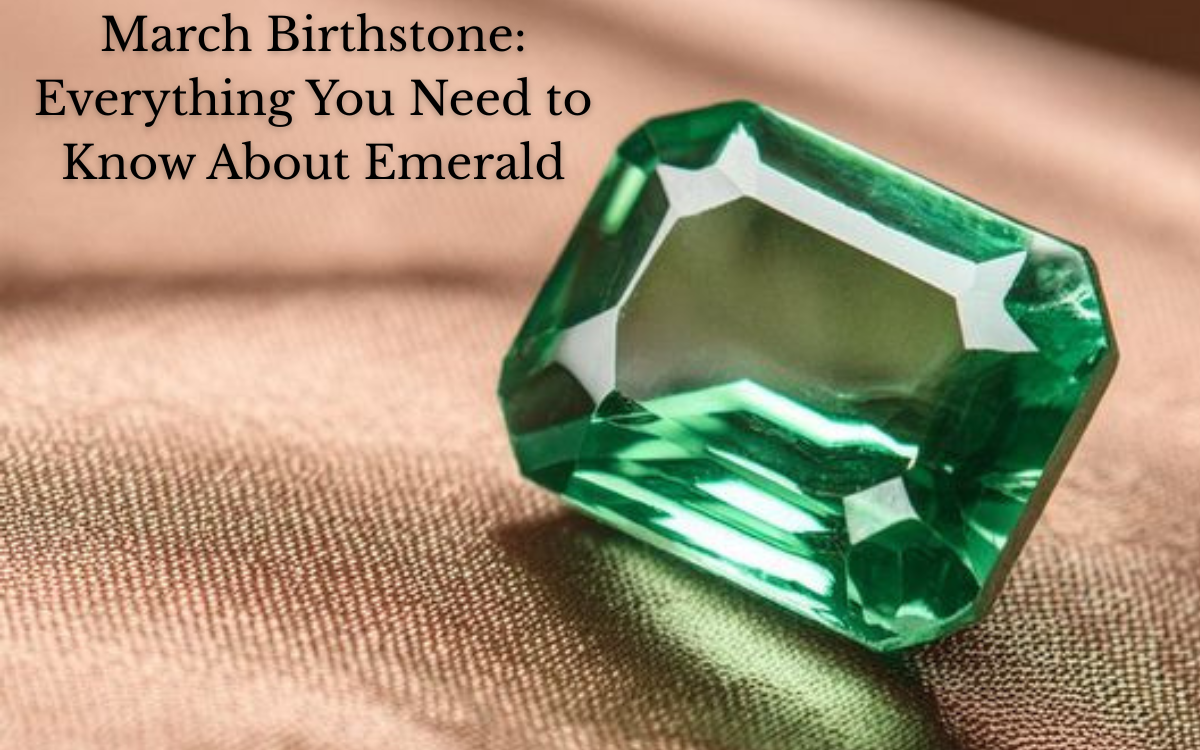
Emerald is the birthstone for March, and it is one of the most recognised gemstones in the world. Known for its deep, vivid green, it belongs to the beryl mineral family and has been prized in fine jewellery for thousands of years.
What Is an Emerald, Exactly?
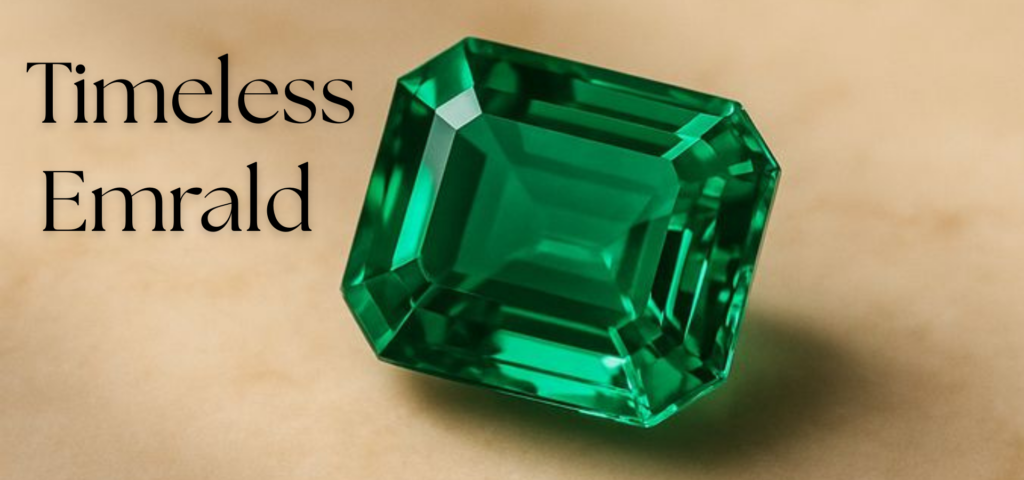
Emerald is a variety of beryl, a mineral that also produces aquamarine and morganite. What makes beryl green – and specifically, what makes it an emerald – is the presence of chromium, vanadium, or both within its crystal structure.
Not every green beryl earns the emerald label, though. Colour is the deciding factor. Gemmologists and laboratories like the GIA assess whether a stone’s green is dark and saturated enough to qualify. If the hue is considered too light, the stone is graded as green beryl, which is noticeably less valuable.
The word “emerald” itself comes from the ancient Greek “smaragdus,” simply meaning green. The Roman author Pliny the Elder, writing in the first century AD, described emerald as a stone that “greens greener” than anything else in nature. He also noted that craftsmen and stone-cutters would rest their eyes by gazing at emerald – something that aligns with what we now know about the colour green reducing eye strain and stress.
The History of Emerald: A Gem With Real Heritage
Ancient Egypt and Cleopatra’s Love of Green
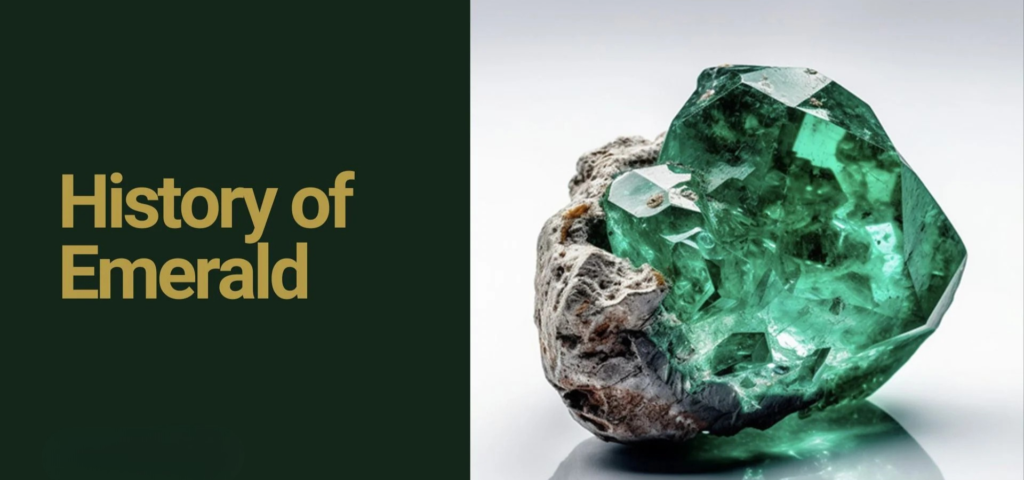
The oldest known emerald mines in the world are found in Egypt, believed to have been active from at least 330 BC. Cleopatra was famously associated with emeralds, using them in her jewellery, her palace, and as diplomatic gifts. Historians now note, however, that some of what she called emeralds were likely peridot, another green gem that Egypt produced in abundance at the time.
The Inca Empire and Spanish Conquest
In South America, the Inca civilisation was using emeralds from present-day Colombia in jewellery and religious ceremonies from as early as the 11th century. When Spanish conquistadors arrived in the 16th century, they seized these stones and traded them across Europe and Asia in exchange for gold and silver. This is how emerald became a global obsession – it was not discovered so much as forcibly redistributed.
Where Emeralds Come From Today
The three main sources of emerald today are Colombia, Brazil, and Zambia. Colombian emeralds are widely considered the benchmark for colour, often displaying a warm, slightly bluish green. Brazilian stones tend to be lighter. Zambian emeralds, which sit at the heart of our own ethical sourcing at Terra company HK, are known for their deep, cool green with excellent clarity compared to many Colombian stones.
Emerald Colour: Why It Matters More Than Anything
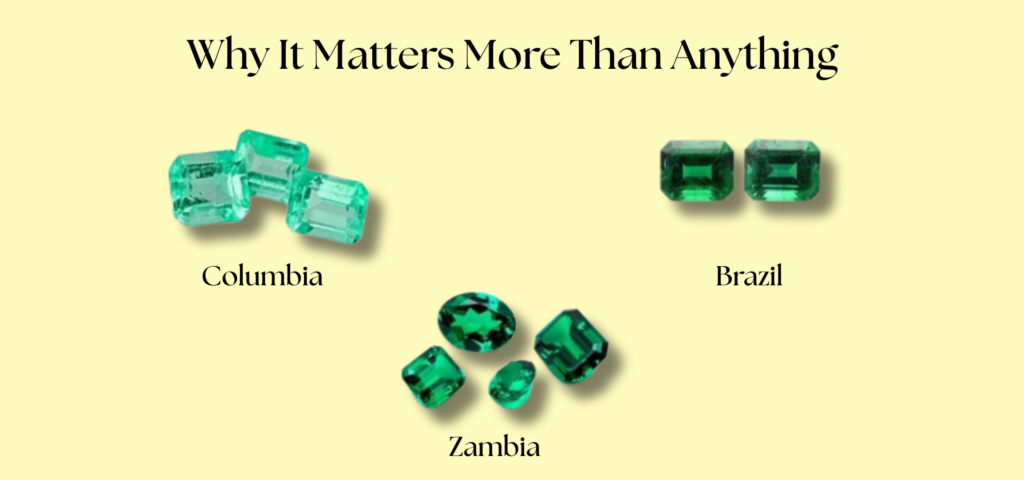
When evaluating any emerald, colour carries the most weight. The ideal stone is a medium to deep green with strong saturation. Hue can range from a pure green through to slightly bluish green, with the latter often considered the most desirable by experts and collectors.
Tone matters too. A stone that is too pale loses the intensity that defines an emerald. A stone that is too dark can appear murky or black under certain lighting. The sweet spot is a vivid, lively green that holds its colour in different light conditions.
Colour grading emeralds is not a simple process. Because the threshold between “emerald” and “green beryl” is partly subjective, lab certification from bodies like the GIA, Gübelin, or SSEF adds real value when buying a significant stone.
Inclusions in Emerald: What the French Call “Jardin”
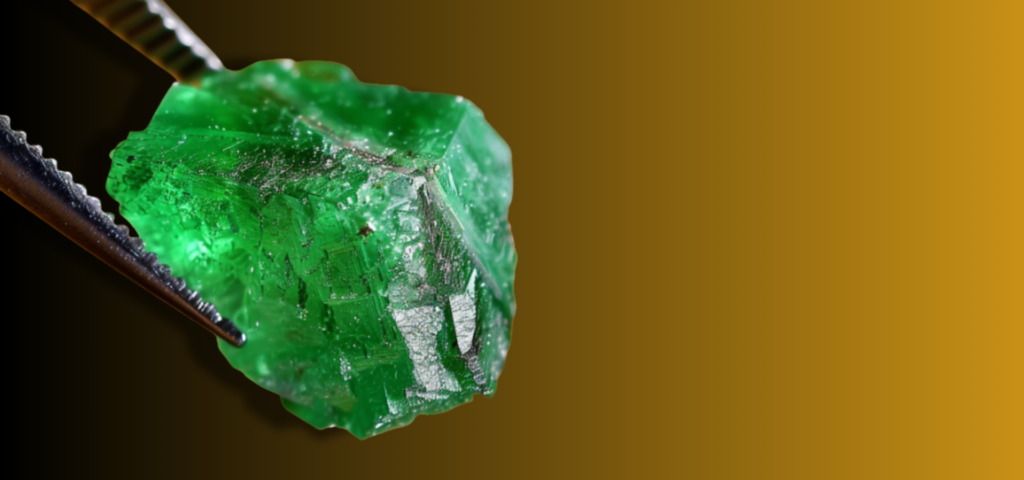
Almost every natural emerald contains inclusions. These are internal characteristics – tiny fractures, gas bubbles, mineral crystals – that formed as the stone grew. In the trade, this network of inclusions is called “jardin,” the French word for garden, because it can resemble plant-like structures under magnification.
Unlike diamonds, where inclusions are largely seen as flaws, emerald inclusions are accepted as part of the stone’s identity. An emerald with no inclusions whatsoever should be treated with suspicion – it is likely synthetic or glass.
What you do want to avoid is inclusions that reach the surface, particularly at the edges or corners of the stone, as these create weak points where cracking can occur. A stone whose inclusions sit well inside the body, away from the girdle and corners, is structurally sound and suitable for everyday wear.
How Hard Is Emerald? Understanding Durability

Emerald scores 7.5 on the Mohs Scale of Hardness. For context, diamond is 10 and sapphire is 9. That means emerald is reasonably resistant to scratching from most everyday surfaces.
The real concern with emerald is not hardness but toughness. Because of inclusions and natural fractures, emerald can be brittle. A sharp knock at the wrong angle can chip or crack the stone.
This is why setting choice matters so much. At Terra company HK, we lean towards protective settings for emerald rings – bezel settings and rub-over settings that wrap the metal around the edge of the stone, shielding its most vulnerable points. Claw settings can work well too when the claws are placed thoughtfully at the corners.
Emerald Treatments: What You Should Know Before You Buy
The vast majority of natural emeralds on the market have been treated with oil or resin. This is an accepted and long-standing practice in the gem trade. The treatment fills surface-reaching fractures, improving the stone’s apparent clarity and sometimes its colour.
Treatments are graded on a scale from “none” to “minor,” “moderate,” or “significant.” A stone with no treatment or minor treatment commands a premium. Heavily oiled stones are considerably less valuable and may deteriorate over time as the filler breaks down.
When you buy an emerald from Terra company HK, we are transparent about treatment levels. For significant stones, we recommend certification from a reputable laboratory that specifies the degree of treatment, so you know exactly what you are investing in.
Emerald in Jewellery: Cuts, Settings, and Styles
The Emerald Cut
The rectangular step cut known as the “emerald cut” was developed specifically for this gem. Its broad, flat table and stepped facets show off colour beautifully and reduce the leverage stress that more complex cuts can create. It remains the most popular choice for emerald engagement rings and pendants.
Other Popular Cuts
Oval, cushion, and round brilliant cuts are all used for emerald. Each brings something different – ovals elongate the finger, cushions give a vintage feel, and rounds maximise brilliance. Cabochon cuts (dome-shaped, unpolished) are used for lower-quality stones or in more artisan styles.
Metal Pairings
Yellow gold and emerald is a pairing with deep historical roots, and for good reason – the warmth of the metal amplifies the richness of the green. White gold and platinum offer a cooler, more contemporary contrast. Rose gold sits somewhere in between and works beautifully with lighter-toned emeralds.
Caring for Your Emerald Jewellery
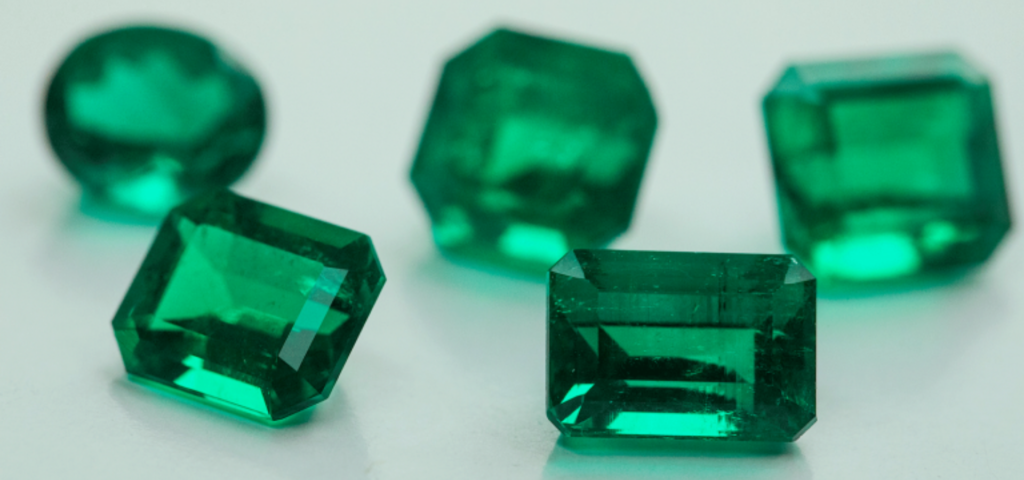
Emerald is not a gem you can treat carelessly. A few straightforward habits will keep it looking its best for decades.
- Clean with lukewarm water and a soft brush only. Avoid ultrasonic cleaners and steam cleaners, as vibration and heat can worsen existing fractures and degrade oil treatments.
- Remove emerald rings before gardening, gym sessions, or any task where impact is likely.
- Store emerald pieces separately, wrapped in soft cloth, so harder stones cannot scratch them.
- Have the setting checked annually by a jeweller to make sure prongs or bezels have not shifted.
Emerald as a Birthstone and Gift
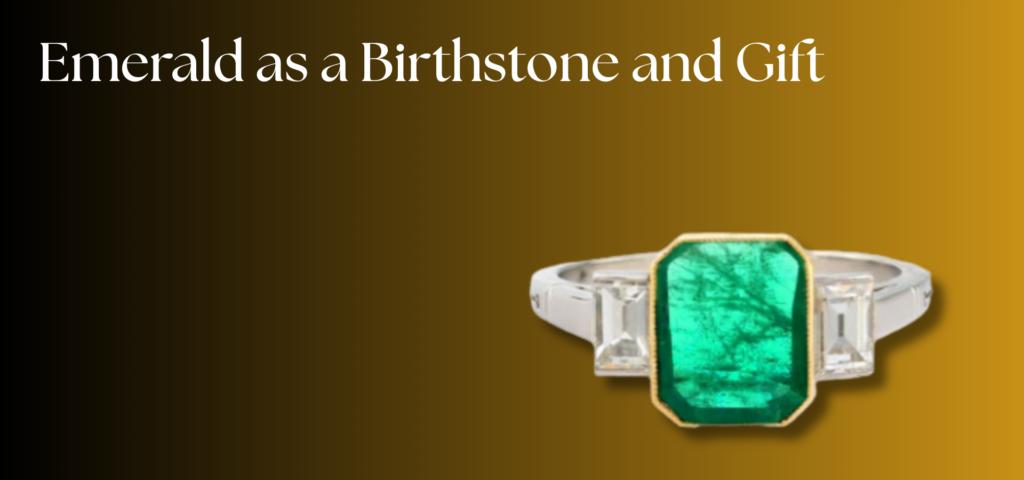
As the March birthstone, emerald carries strong associations with renewal, growth, and clear thinking – fitting for a month that sits on the threshold of spring. It is also the traditional gemstone for 20th and 35th wedding anniversaries.
Beyond birthstones, emerald has long been given as a symbol of loyalty and truth. Historically, people believed it could reveal dishonesty and encourage honest speech – which, whether you believe in gem lore or not, makes it a rather bold choice of gift for someone you trust completely.
Why Choose Terra company HK for Your Emerald

We source our emeralds with care, prioritising ethical supply chains and full transparency about origin and treatment. Every emerald we work with is selected for strong colour, acceptable clarity, and structural integrity – because a beautiful stone that cracks after six months is not a good stone.
Our team can guide you through every decision, from cut and setting to metal choice and certification. Whether you are looking for an emerald engagement ring, a gift for a March birthday, or a bespoke piece built around a specific stone, we are here to make the process straightforward and genuinely enjoyable.
Get in touch with us to start the conversation.